
Underslung EOT Crane Manufacturers in India | Custom Solutions
What Is an Underslung EOT Crane?
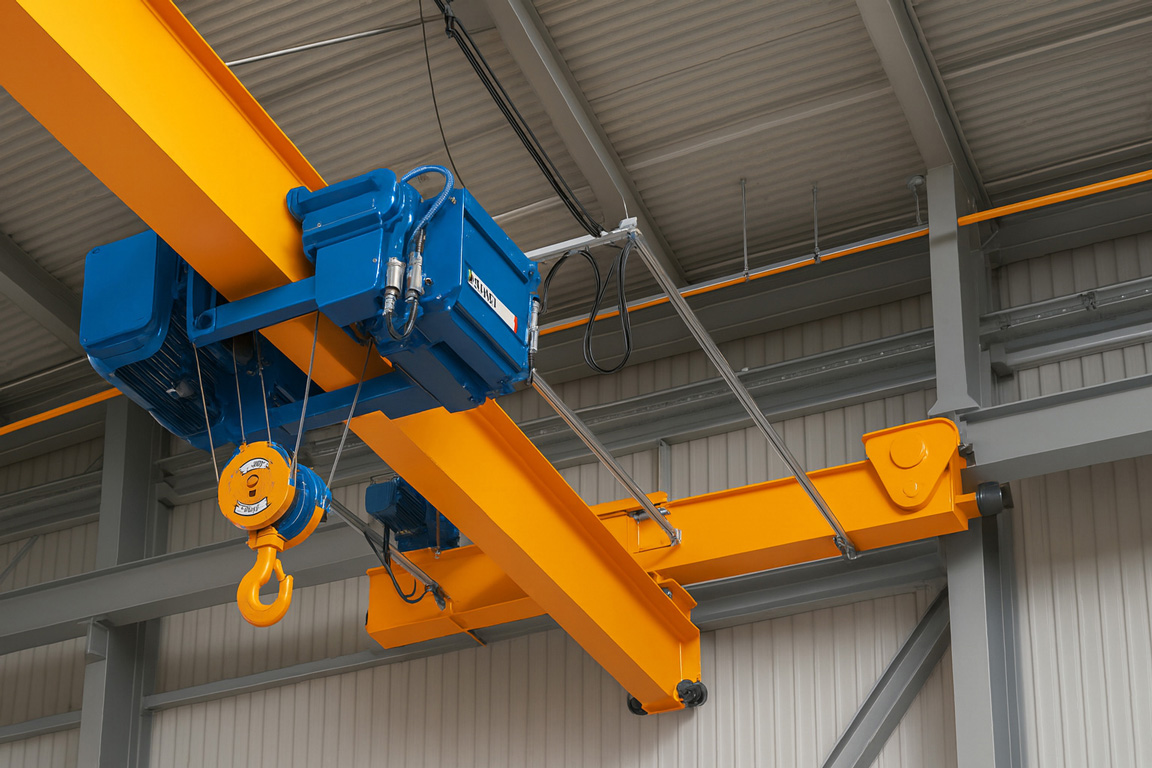
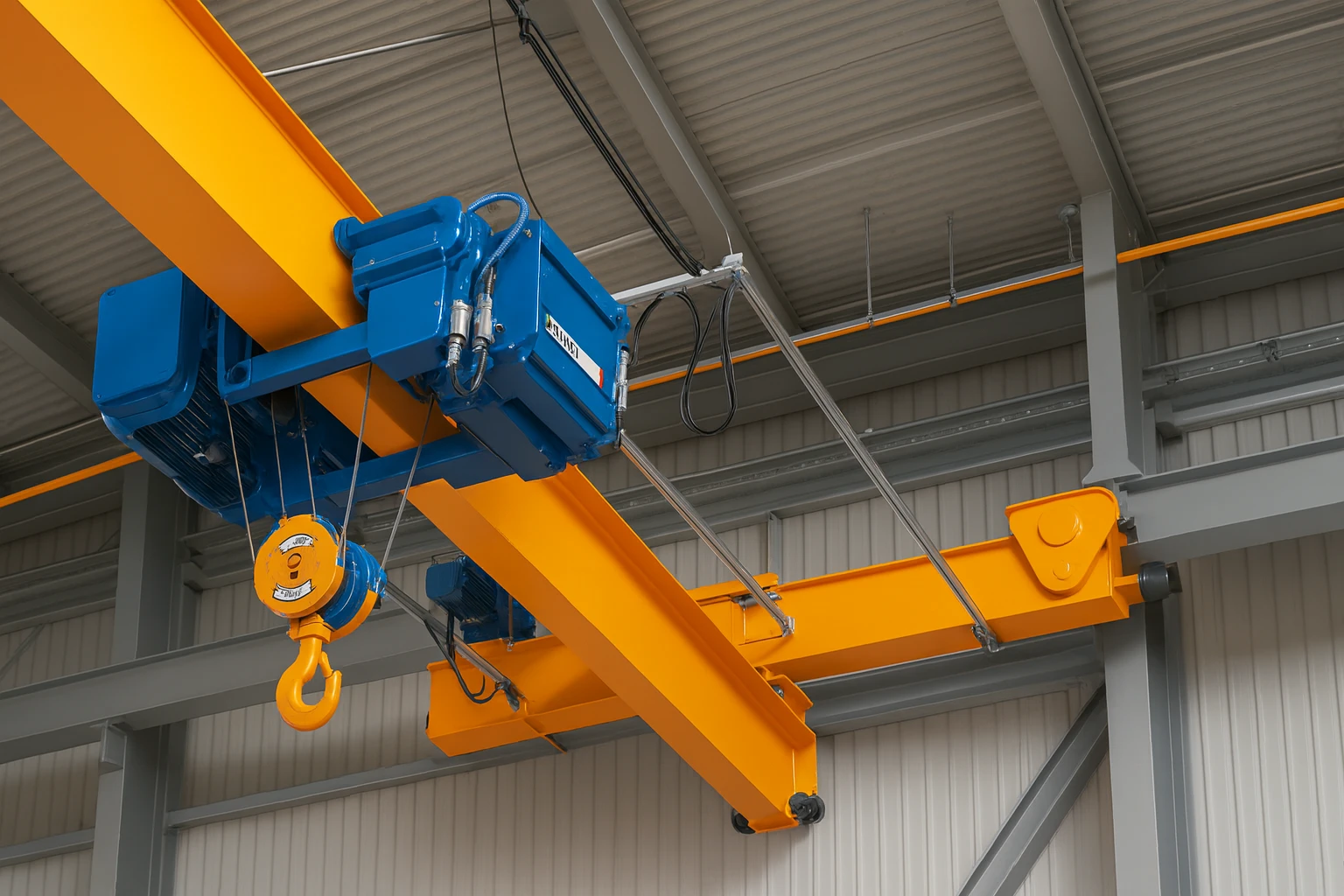
An Underslung EOT Crane is an overhead travelling crane in which the bridge girder and end carriages travel beneath the runway beams. The crane is supported from the lower flange of the runway structure, allowing the available building height to be used efficiently.
Underslung cranes are particularly useful in manufacturing plants, workshops, warehouses and other industrial areas where headroom is restricted or where a conventional top-running EOT crane is not suitable. Depending on the building structure and load requirements, the runway system may be suspended from the existing roof structure or supported by specially designed structural frames.
How Does an Underslung EOT Crane Work?
An underslung EOT crane performs three primary movements: lifting, cross travel and long travel. The electric hoist lifts and lowers the load, the hoist trolley moves across the bridge, and the crane bridge travels along the runway beams.
- Lifting and Lowering: The electric hoist raises and lowers the load using a wire rope or chain, depending on the selected hoist configuration.
- Cross Travel: The hoist trolley travels along the crane bridge to position the load across the working area.
- Long Travel: The crane bridge travels along the runway system to move the load from one location to another.
- Control: Operators can control crane movements using a pendant station, radio remote control or cabin control, depending on the crane configuration.
Types of Underslung EOT Cranes
WSP Cranes & Services offers different underslung crane configurations based on lifting capacity, building conditions, operating requirements and duty classification.
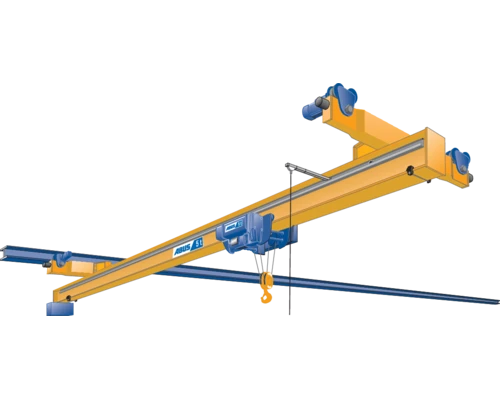
- Single Girder Underslung EOT Crane: A single-girder configuration designed for light to medium-duty material handling. It is commonly used in workshops, manufacturing areas and warehouses where available headroom is limited.
- Double Girder Underslung EOT Crane: A double-girder configuration suitable for applications requiring higher lifting capacities, greater lifting heights or increased structural rigidity.
- Low-Headroom Underslung Crane: Designed to maximize usable lifting height in buildings where vertical clearance is restricted.
- Explosion-Proof Underslung EOT Crane: Specially configured for selected hazardous-area applications. Electrical components, motors, controls and other equipment must be selected according to the applicable hazardous-area classification and project requirements.
- European Design Underslung Crane: A compact crane configuration designed for efficient space utilization, smooth operation and optimized maintenance requirements.
Underslung EOT Crane Technical Specifications
The specifications of an underslung EOT crane are determined by the required safe working load, span, lifting height, building structure, operating cycle and duty classification. The following ranges are indicative and should be finalized according to the application and engineering design.
| Specification | Single Girder | Double Girder | European Design | Explosion-Proof |
|---|---|---|---|---|
| Capacity | Typically up to 10 tonnes | Typically up to 25 tonnes | Application dependent | Application dependent |
| Span | Application dependent | Application dependent | Application dependent | Application dependent |
| Lifting Height | Application dependent | Application dependent | Application dependent | Application dependent |
| Duty Classification | M3–M5 | M5–M6 | Application dependent | Application dependent |
| Hoist Type | Low-headroom electric hoist | Electric wire rope hoist / trolley | Compact electric hoist | Hazardous-area suitable hoist |
| Control | Pendant / Radio Remote | Pendant / Radio Remote / Cabin | Pendant / Radio Remote | Suitable hazardous-area control system |
| Travel Drive | Electric motor driven | Electric motor driven | Electric motor with optional VFD | Application dependent |
| Runway Arrangement | Underslung runway beams | Underslung runway beams | Underslung runway beams | Engineered for project requirements |
Main Components of an Underslung EOT Crane
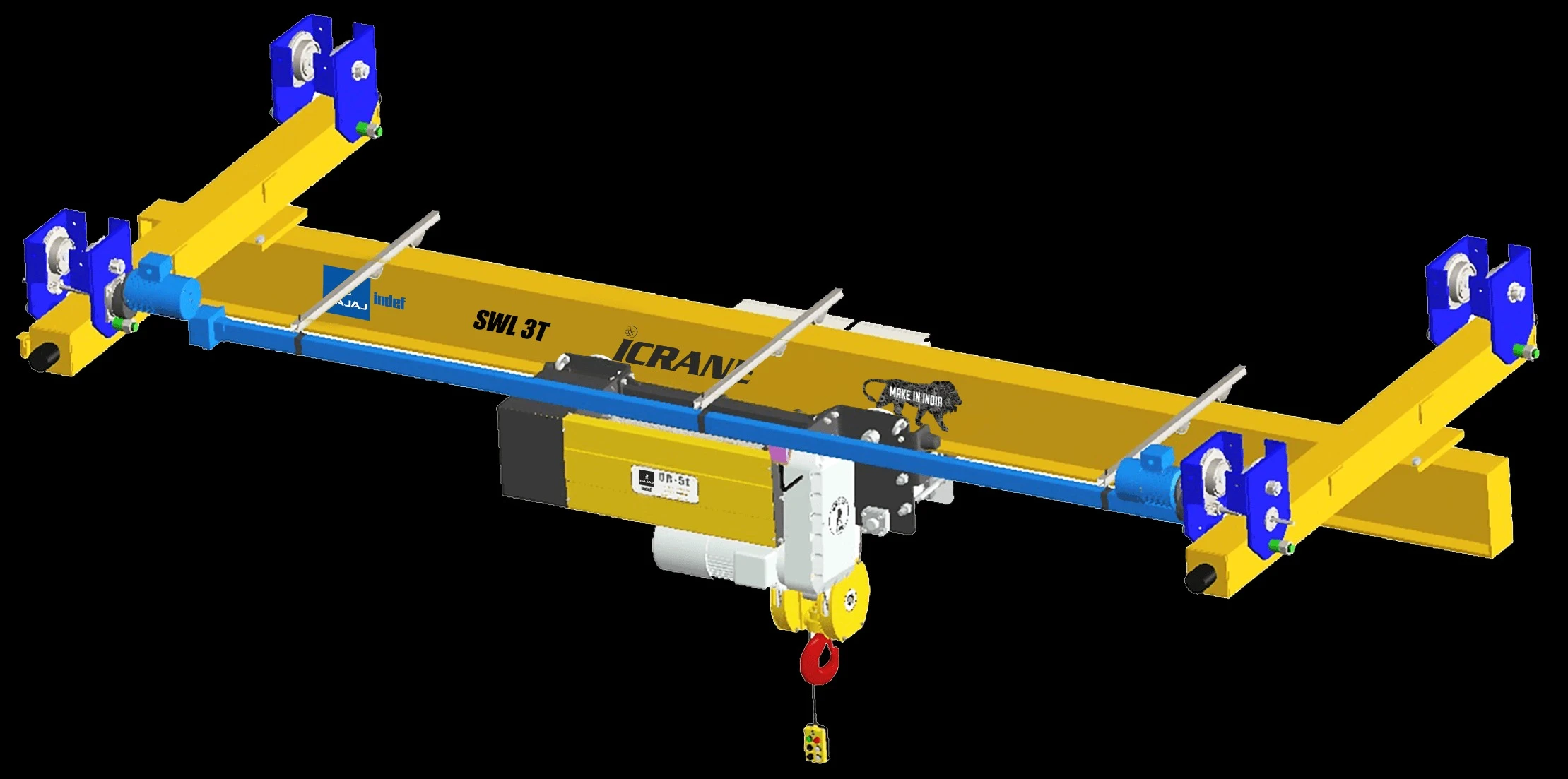
- Bridge Girder: The main horizontal structural member that supports and guides the hoist trolley.
- End Carriages: End carriages support the bridge and contain the wheels and drive arrangements that allow the crane to travel along the runway.
- Electric Hoist and Trolley: The hoist performs the lifting and lowering operation while the trolley moves the load across the crane bridge.
- Runway Beams and Rails: The runway system supports the travelling crane and provides the path for long travel.
- Electrical Control System: The control system enables the operator to control lifting, lowering, cross travel and long travel functions.
- Safety Devices: Depending on the design, safety equipment can include limit switches, overload protection, emergency stop systems, brakes, buffers and other project-specific safety devices.
Benefits of an Underslung EOT Crane
- Efficient Use of Headroom: The underhung configuration can be advantageous in buildings with limited vertical clearance.
- Better Space Utilization: The crane operates beneath the runway structure, helping maximize usable floor and building space.
- Flexible Installation: Underslung systems can be engineered around existing structural conditions where suitable support arrangements are available.
- Smooth Material Handling: Electric drives and suitable control systems provide controlled movement for lifting and material-transfer operations.
- Suitable for Multiple Industrial Applications: Underslung cranes can be configured for workshops, manufacturing facilities, warehouses, assembly areas and maintenance applications.
- Customizable Configuration: Capacity, span, lifting height, speeds, controls, hoist type and safety features can be selected according to project requirements.
Applications of Underslung EOT Cranes
Underslung EOT cranes are commonly considered for industrial environments where efficient use of available headroom and existing building structures is important.
- Manufacturing Plants: For transferring raw materials, components, machinery and finished products.
- Automotive and Engineering Industries: For assembly operations, component handling and movement of equipment.
- Warehouses: For lifting, positioning and transferring materials within designated handling areas.
- Machine Shops and Workshops: For handling machinery, tools, fabricated components and maintenance equipment.
- Maintenance Facilities: For lifting motors, machine components and other heavy equipment during maintenance and repair operations.
- Textile and Fabrication Industries: For handling materials, rolls, fabricated components and other industrial loads.
- Loading and Unloading Areas: For controlled movement of materials between designated industrial handling points.
Underslung EOT Crane Installation Process
Proper installation is essential for safe and reliable crane operation. The installation procedure should be carried out by qualified personnel according to the approved crane design, structural calculations and applicable safety requirements.
- Site Inspection: Inspect the building structure, available headroom, runway arrangement, power supply and operating area.
- Structural Verification: Verify that the supporting structure and runway arrangement are suitable for the proposed crane loads and operating conditions.
- Crane Assembly: Assemble the bridge girder, end carriages, hoist, trolley and associated equipment.
- Runway and Electrical Installation: Install and align the runway system, electrical power supply and control equipment.
- Alignment and Testing: Check wheel alignment, bridge travel, hoist operation, brakes, limit switches and other safety functions before commissioning.
- Commissioning: Conduct the required inspection and testing in accordance with the applicable standards, project specifications and statutory requirements.
Why Choose WSP Cranes & Services?
- Industrial Experience: We provide engineered crane and material-handling solutions for industrial applications.
- Customized Designs: Crane configurations can be developed according to lifting capacity, span, lifting height, building structure and operating requirements.
- Quality-Focused Manufacturing: Components and systems are selected and manufactured with emphasis on performance, reliability and safe operation.
- Application-Based Solutions: We help customers select suitable crane configurations based on their actual material-handling requirements.
- Service Support: Installation, commissioning and after-sales support can be provided according to project requirements.
Underslung EOT Crane Manufacturer in India
WSP Cranes & Services provides Underslung EOT Cranes in India for applications requiring efficient material handling in areas with limited headroom. Our solutions can be customized according to the required capacity, span, lifting height, duty classification, operating speed and building structure.
Whether you require a single-girder underslung crane, double-girder configuration, low-headroom crane or a specialized crane for a specific industrial environment, our team can assist with crane selection, design, manufacturing, installation and commissioning.
Looking for an Underslung EOT Crane for your factory or workshop? Share your required lifting capacity, span, lifting height and application with us to discuss a suitable crane configuration.
Frequently Asked Questions About Underslung EOT Cranes
An Underslung EOT Crane is an overhead travelling crane that operates below its runway beams. The crane bridge is supported from the lower flange of the runway structure, making this configuration suitable for applications where headroom is limited.
A top-running EOT crane travels on top of its runway rails, while an underslung EOT crane travels beneath the runway beams. The underslung configuration can be advantageous where building height and headroom are limited, provided the existing structure is suitable for the required loads.
Underslung EOT Cranes are commonly used in manufacturing plants, workshops, warehouses, machine shops, assembly areas, maintenance facilities and other industrial applications where efficient use of headroom is important.
The required capacity depends on the application and crane configuration. Single-girder underslung cranes are generally used for light to medium loads, while double-girder configurations can be designed for higher capacities. The final safe working load should be determined from the project requirements and engineering design.
Yes. An underslung EOT crane can be customized according to lifting capacity, span, lifting height, duty classification, travel speeds, hoist configuration, control system, runway arrangement and available building space.
It can be suitable for factories with restricted headroom because the crane travels beneath the runway structure. However, the suitability depends on the available clearances, building structure, required lifting height and load capacity.
To prepare a suitable crane proposal, manufacturers typically require the lifting capacity, crane span, lifting height, runway length, duty classification, application, operating environment, available headroom and preferred control system. Structural and site details may also be required.
WSP Cranes & Services provides customized crane solutions for industrial applications, including underslung EOT cranes. We focus on application-specific design, manufacturing, installation, commissioning and service support.

