Double Girder EOT Crane Manufacturers in India
What Is a Double Girder EOT Crane?
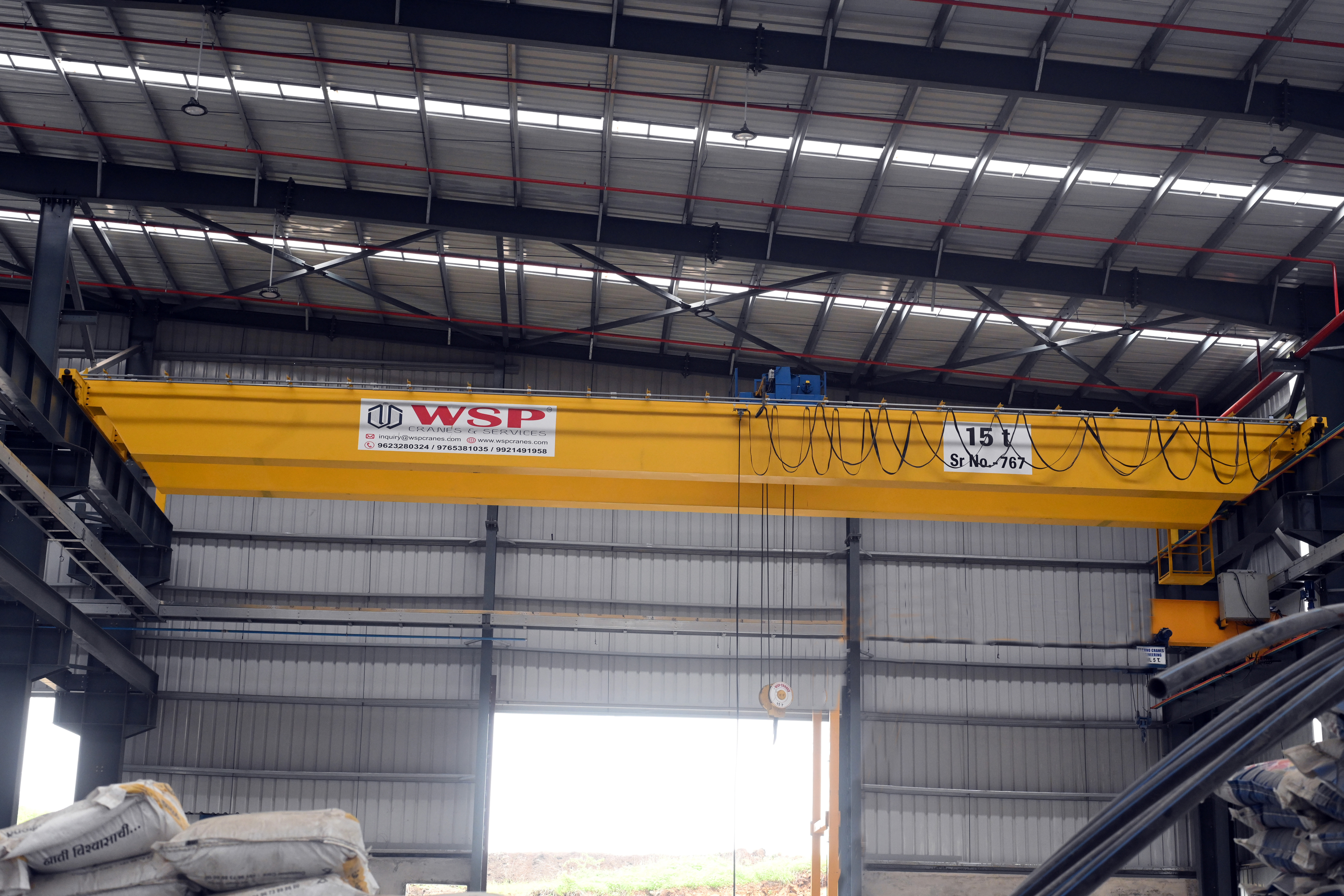
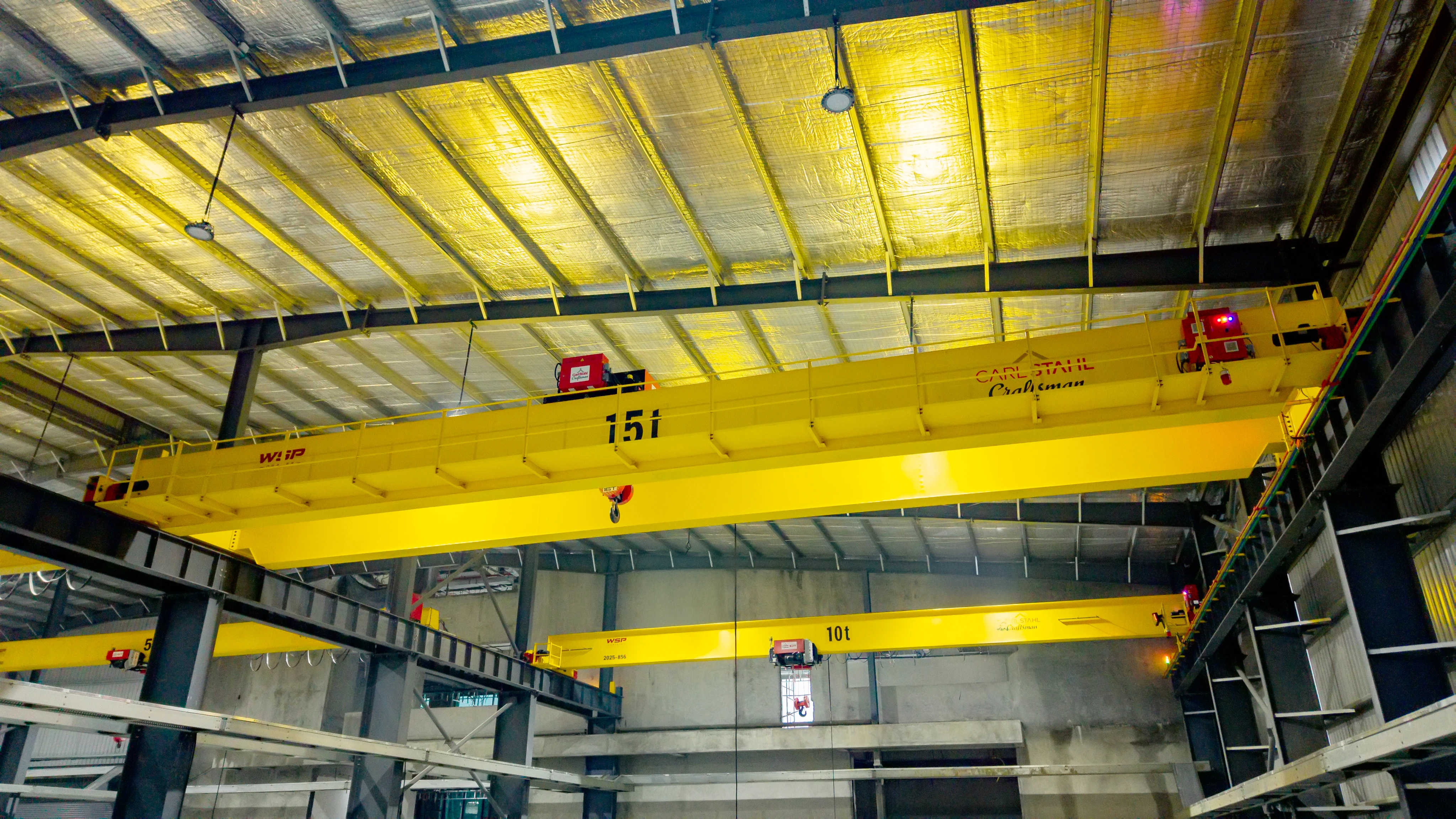
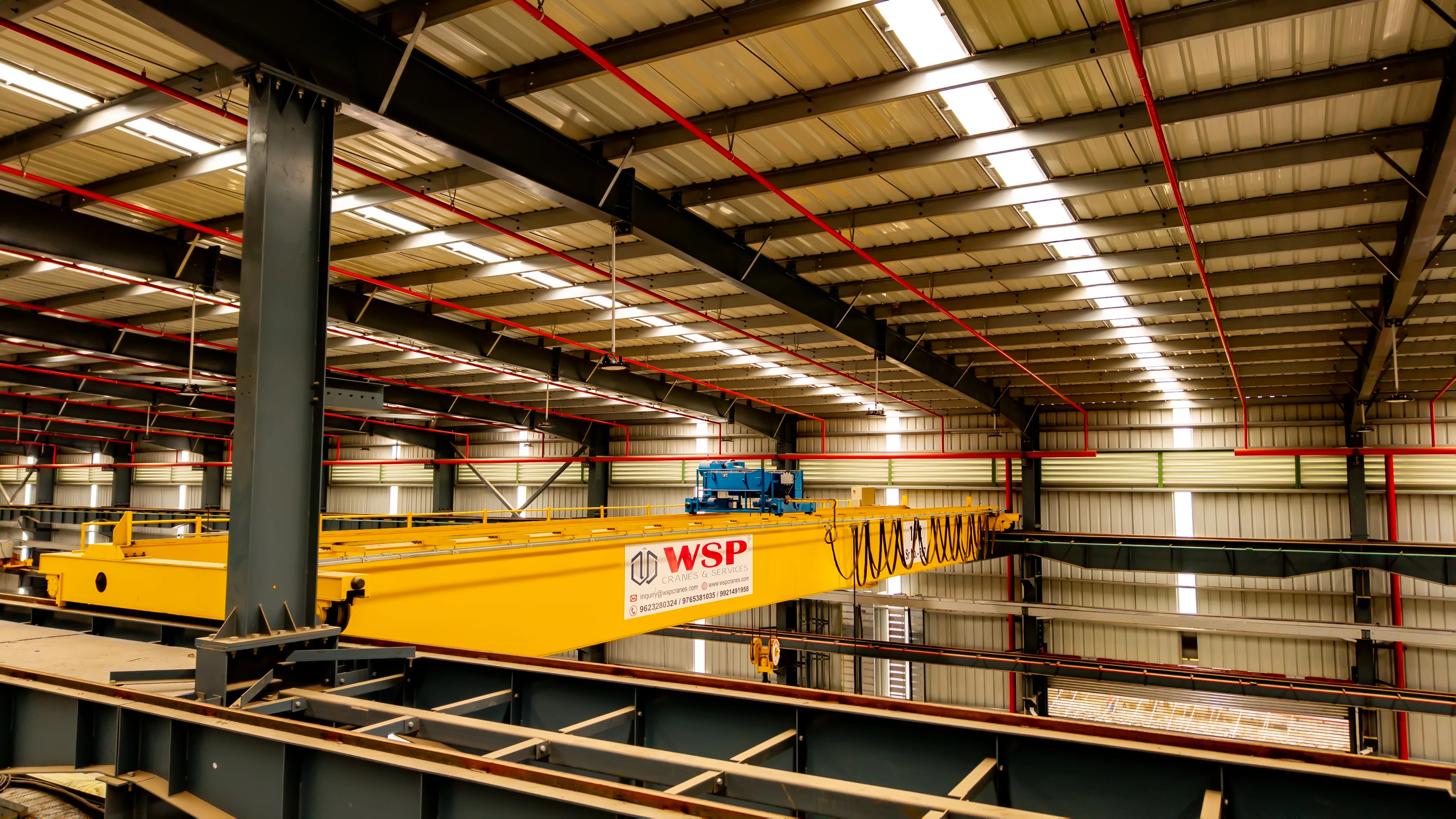
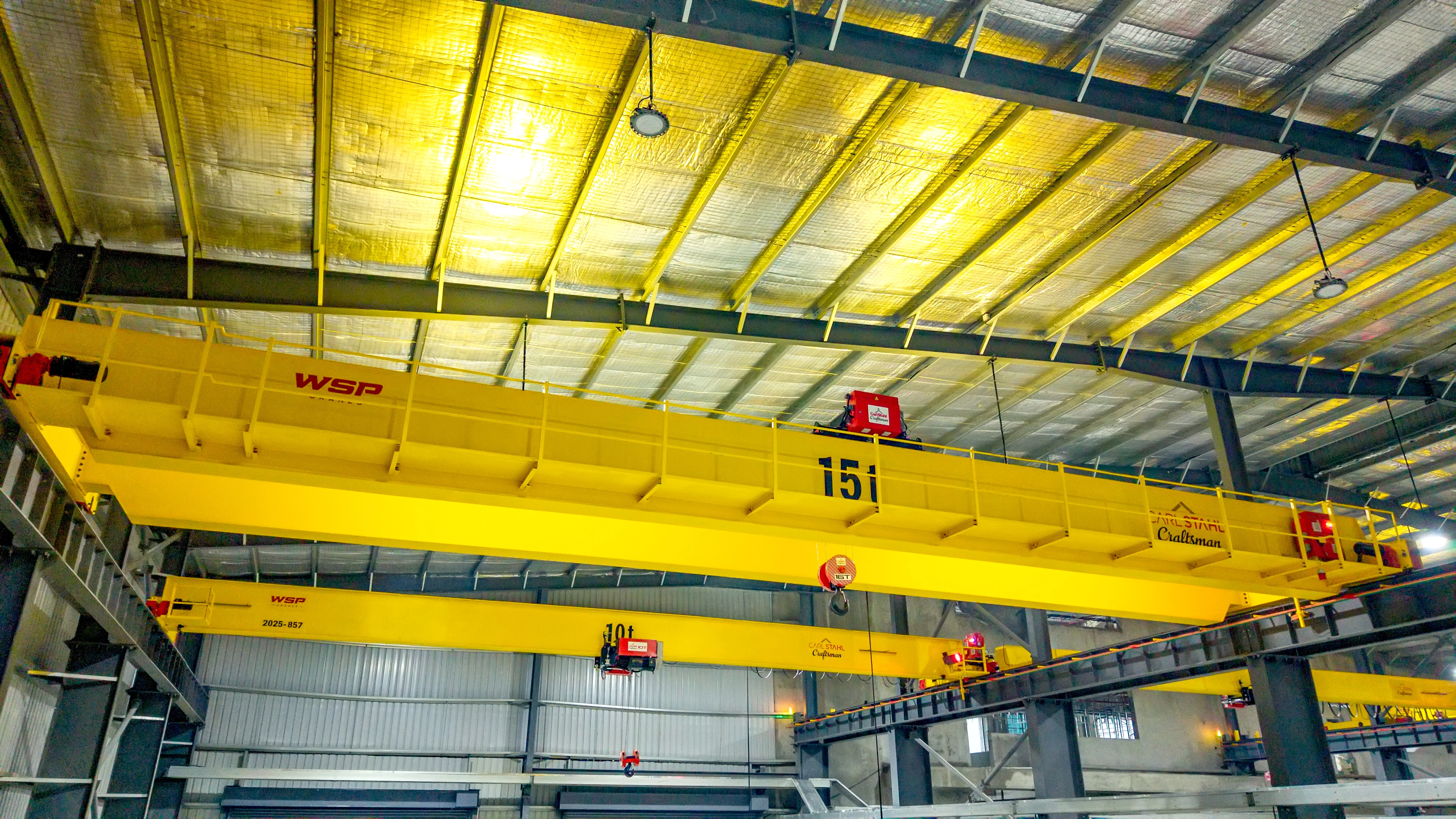
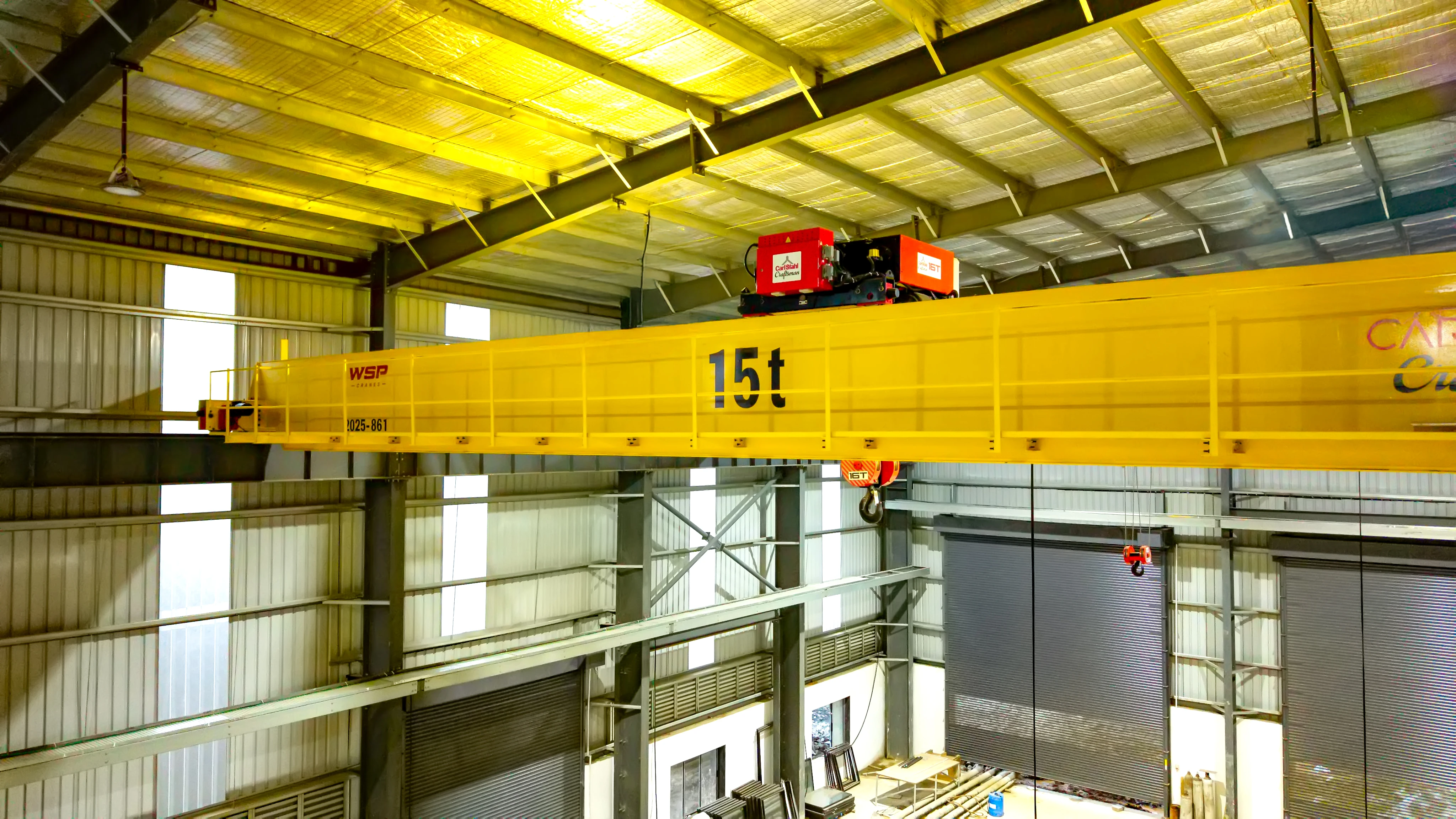
A Double Girder EOT (Electric Overhead Travelling) Crane consists of two parallel bridge girders supported by end carriages. The crane travels along runway rails installed at an elevated level within the building. A trolley and hoisting mechanism travel along the bridge girders to lift, lower, and position loads.
This arrangement provides good stability and load distribution, particularly for heavy loads and larger crane spans. Double girder cranes are therefore commonly selected for applications where a standard single girder EOT crane may not provide the required capacity, hook height, span, or duty performance.
Depending on the application, the crane can be equipped with different hoists, trolleys, controls, hooks, brakes, safety systems, and attachments.
Why Choose a Double Girder EOT Crane?
The right overhead crane depends on the load and operating conditions of the facility. A double girder design can offer several advantages for heavy-duty applications.
Higher lifting capacity
Two bridge girders provide a strong and rigid crane structure capable of handling higher working loads. The actual capacity is selected according to the application, span, duty cycle, and engineering requirements.
Better hook height
The hoisting arrangement can be designed to make effective use of the available building height. This is particularly useful where maximum lifting height is important.
Suitable for longer spans
Double girder cranes are commonly used for large production halls, steel plants, heavy engineering facilities, and other applications where the crane needs to cover a wide working area.
Reliable heavy-duty operation
With the appropriate hoist, motors, brakes, controls, and duty classification, a double girder EOT crane can be configured for frequent and demanding material-handling operations.
Flexible configuration
The crane can be engineered around the customer's requirements rather than using a single standard configuration. Options can include cabin or remote operation, different hoisting arrangements, variable-speed drives, specialized hooks, and application-specific lifting attachments.
Working Principle of a Double Girder EOT Crane
A double girder EOT crane performs three basic movements: bridge travel, trolley travel, and hoisting.
The bridge travels along runway rails installed on the supporting structure of the building. The trolley moves across the two bridge girders, allowing the load to be positioned across the width of the working area. The hoisting mechanism raises and lowers the load using a wire rope and hook arrangement.
These movements can be controlled using a pendant, radio remote, cabin, or another suitable control system depending on the crane design and application.
Proper selection of motors, gearboxes, brakes, wheels, electrical components, and control equipment is important for achieving smooth and dependable crane operation.
Types of Double Girder EOT Cranes
Different industries require different crane configurations. Some of the commonly used double girder EOT crane arrangements include the following.
-
Top Running Double Girder EOT Crane
In a top-running crane, the bridge travels on top of the runway rails. This arrangement is widely used in manufacturing plants, steel facilities, heavy engineering units, and workshops.
Top-running cranes are suitable where higher capacities, longer spans, and greater lifting heights are required.
-
Under Running or Underslung Double Girder Crane
An underslung crane travels from the lower flange of the runway structure. This configuration can be considered where building conditions, existing structures, or available headroom make a conventional top-running arrangement unsuitable.
The correct configuration should be selected after evaluating the building structure, runway arrangement, load requirements, and available clearance.
-
Box Girder Double Girder Crane
Box girder construction provides a rigid bridge structure and can be used for demanding industrial applications. The girder design is selected according to factors such as capacity, span, wheel loads, operating duty, and structural requirements.
-
Grab Bucket Crane
Grab cranes are designed for handling bulk materials. A grab attachment can be used for applications involving materials such as coal, minerals, scrap, sand, or other bulk products.
The grab capacity and crane duty need to be selected according to the material characteristics and operating cycle.
-
Magnet Crane
Magnet cranes use an electromagnetic lifting attachment for handling suitable ferrous materials. They are commonly considered for applications involving steel plates, bars, scrap, billets, and other magnetic materials.
The magnet system, electrical supply, backup arrangement, and safety provisions should be selected according to the application.
-
Ladle and Casting Cranes
Steel plants and foundries can require specialized cranes for handling ladles and high-temperature loads. These cranes require application-specific engineering, protection systems, lifting arrangements, and operating procedures because of the demanding working environment.
Double Girder EOT Crane Technical Specifications
The specifications of an EOT crane should always be finalized according to the actual application rather than selecting a crane based only on lifting capacity.
Typical parameters considered during crane design include:
| Parameter | Typical consideration |
| Lifting capacity | Selected according to the maximum working load |
| Crane span | Based on the building and runway arrangement |
| Lifting height | Determined by required hook height and available headroom |
| Duty classification | Selected according to load spectrum and operating frequency |
| Hoisting speed | Selected according to load handling requirements |
| Bridge travel speed | Based on building size and operating requirements |
| Trolley travel speed | Selected according to positioning requirements |
| Control system | Pendant, radio remote, cabin, or combination |
| Hoist arrangement | Wire rope hoist or engineered heavy-duty hoisting system |
| Power supply | Selected according to site electrical conditions |
| Safety systems | Limit switches, overload protection, brakes, emergency stop and other applicable systems |
The final technical specification should be prepared after reviewing the customer's load characteristics, operating cycle, building dimensions, runway arrangement, and environmental conditions.
How to Select the Right Double Girder EOT Crane
Choosing a crane only by its tonnage can result in an unsuitable design. Several factors should be evaluated before manufacturing.
-
1. Load capacity
Determine the maximum load that the crane will need to lift. Consider both the normal working load and any special lifting requirements.
-
2. Span
The span is the distance between the runway rails. Accurate building and runway measurements are important when determining the crane's bridge dimensions.
-
3. Lifting height
The required hook height should be considered together with available headroom, roof structure, trolley dimensions, and existing equipment.
-
4. Operating frequency
The crane's duty classification should reflect how often it operates, the load spectrum, and the expected working cycle.
-
5. Working environment
Temperature, dust, humidity, outdoor exposure, corrosive conditions, and high-temperature processes can affect component selection and crane configuration.
-
6. Control requirements
Depending on the application, the crane may be operated from a pendant, radio remote, cabin, or a combination of control systems.
-
7. Special lifting attachments
Some applications require equipment such as magnets, grabs, lifting beams, hooks, or other specialized attachments.
A detailed technical discussion before manufacturing helps ensure that the crane is matched to the actual working conditions.
Applications of Double Girder EOT Cranes
Double girder EOT cranes are used in many industries where heavy materials need to be lifted and moved safely within a defined working area.
-
Steel Plants
Cranes are used for handling steel products, machinery, maintenance equipment, and other heavy materials. Specialized cranes may also be required for ladle and high-temperature applications.
-
Heavy Engineering Industries
Manufacturing and engineering facilities use overhead cranes to move machinery, fabricated structures, dies, components, and other heavy loads during production and assembly.
-
Foundries
Foundries require reliable material-handling equipment for moving molds, castings, equipment, and other heavy components in demanding working environments.
-
Power Plants
EOT cranes can be used during equipment installation, maintenance, and material handling involving generators, turbines, motors, and other heavy machinery.
-
Fabrication Plants
Fabrication units use overhead cranes for moving steel plates, fabricated structures, assemblies, and components between different production stages.
-
Warehouses and Industrial Storage Facilities
Where heavy materials are stored and moved regularly, an overhead crane can help improve handling efficiency while making better use of the available floor and building space.
Safety Features
Safety is an important part of overhead crane design. Depending on the crane configuration and applicable requirements, safety provisions can include:
- Overload protection
- Upper and lower hoisting limit protection where applicable
- Emergency stop systems
- Reliable braking systems
- Travel limit switches
- Audible or visual warning devices where required
- Electrical protection
- Pendant or radio remote emergency controls
- Appropriate guarding and access arrangements
- Anti-collision systems for installations with multiple cranes, where required
Safety equipment should be selected according to the crane design, application, applicable standards, and site conditions.
Manufacturing and Quality Approach
At WSP Cranes & Services, crane manufacturing involves engineering, fabrication, assembly, electrical integration, inspection, and testing.
Each crane needs to be evaluated according to its intended working conditions. Structural components, hoisting equipment, motors, brakes, electrical systems, controls, and safety devices should be selected and assembled to meet the agreed technical requirements.
We also provide support for installation, commissioning, maintenance, and service requirements depending on the project.
WSP Cranes & Services is an ISO 9001:2015 certified company serving industrial customers with material-handling solutions.
Why Choose WSP Cranes & Services?
Selecting an overhead crane manufacturer is an important decision because the crane becomes part of the customer's production and material-handling system.
WSP Cranes & Services provides:
- Double girder EOT crane design and manufacturing
- Application-specific crane configurations
- Engineering support for crane selection
- Industrial lifting solutions for different sectors
- Installation and commissioning support
- Maintenance and after-sales assistance
- Customized crane solutions based on site requirements
- Support for customers across India
Our approach is to understand the application first and then recommend a crane configuration that matches the required capacity, span, lifting height, duty, operating environment, and control requirements.
Double Girder EOT Crane Manufacturer and Supplier in India
WSP Cranes & Services supplies double girder EOT crane solutions for industrial applications across India. Our cranes can be designed for manufacturing plants, steel industries, foundries, engineering companies, fabrication facilities, power plants, warehouses, and other heavy material-handling applications.
Whether you are installing a new crane, replacing an existing crane, expanding production capacity, or upgrading your material-handling system, our engineering team can help evaluate the requirements and recommend a suitable configuration.
Frequently Asked Questions
What is a double girder EOT crane?
A double girder EOT crane is an electrically powered overhead travelling crane that uses two parallel bridge girders to support the hoisting and trolley system. It is commonly used for heavy loads, larger spans, and demanding industrial applications.
What is the difference between a single girder and double girder EOT crane?
A single girder crane uses one bridge girder, while a double girder crane uses two. Double girder cranes are generally preferred for higher capacities, larger spans, greater lifting heights, and heavier-duty applications. The right choice depends on the actual load and operating requirements.
What industries use double girder EOT cranes?
They are commonly used in steel plants, heavy engineering, foundries, fabrication plants, power plants, manufacturing facilities, warehouses, and other industries that require overhead movement of heavy materials.
Can a double girder EOT crane be customized?
Yes. Crane configuration can be designed according to factors such as capacity, span, lifting height, duty classification, operating environment, control method, and special lifting requirements.
How do I select the capacity of an EOT crane?
The capacity should be based on the maximum load the crane needs to handle, along with the load spectrum and operating cycle. Other factors such as span, lifting height, duty classification, and environmental conditions should also be considered.
Do you supply EOT cranes across India?
WSP Cranes & Services provides industrial crane solutions for customers across India. Installation, commissioning, and service requirements can be discussed based on the project location and scope.
Get a Quote for a Double Girder EOT Crane
Every industrial application is different. If you are looking for a double girder EOT crane, share your required lifting capacity, span, lifting height, crane duty, runway length, application, and installation location with our team.
WSP Cranes & Services can review your requirements and help you select a suitable crane configuration for your facility.
Contact WSP Cranes & Services today to discuss your double girder EOT crane requirement and request a technical quotation.

