EOT Crane Manufacturers in Nashik
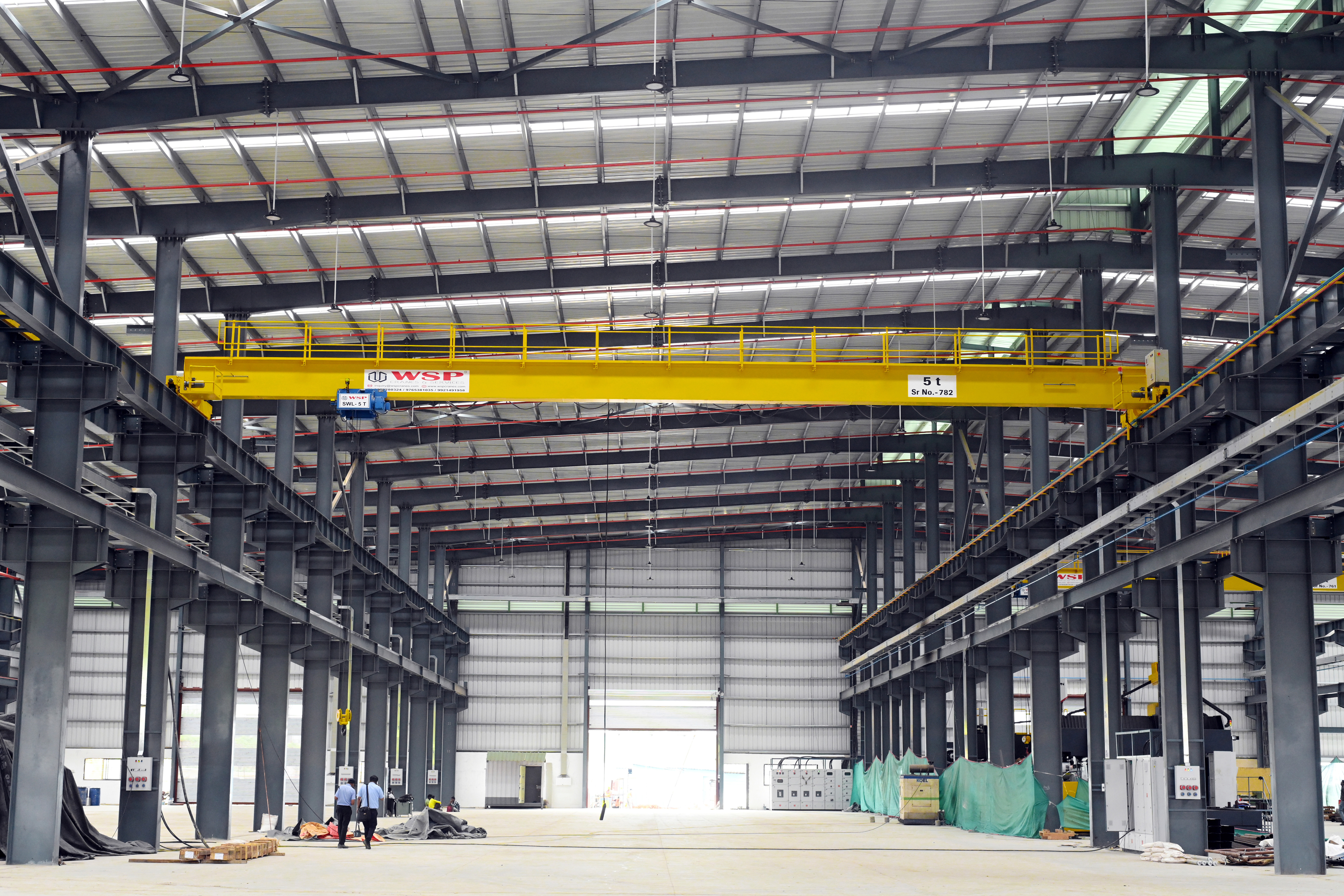
WSP Cranes & Services is an experienced EOT Crane manufacturer and supplier in Nashik, providing electric overhead travelling cranes for industrial material handling applications. Our EOT cranes are designed for safe, reliable and efficient lifting and movement of materials in manufacturing plants, engineering facilities, warehouses, workshops and other industrial environments.
We provide Single Girder EOT Cranes, Double Girder EOT Cranes and customized EOT crane solutions based on lifting capacity, span, lifting height, duty requirements and available building structure. Our team can support customers with crane selection, design, manufacturing, installation and commissioning to help ensure the crane is suitable for the intended application.
For businesses looking for an EOT crane in Nashik, WSP Cranes & Services offers application-focused solutions designed to improve material handling efficiency while reducing dependence on manual lifting. Contact our team to discuss your lifting requirements and request a customized quotation.
What Is an EOT Crane?
An EOT Crane (Electric Overhead Travelling Crane) is an electrically powered overhead lifting system used to lift, lower and horizontally move heavy materials within a defined work area. The crane generally consists of a bridge structure, end carriages, trolley or crab, hoist, electrical control system and runway arrangement.
EOT cranes are commonly used in factories, manufacturing plants, engineering workshops, warehouses, steel plants, foundries and other industrial facilities where repetitive lifting and material movement are required. By using overhead space, an EOT crane can help optimize floor space and improve material handling efficiency.
How Does an EOT Crane Work?
An EOT crane performs three primary movements: hoisting, cross travel and long travel. The electric hoist raises and lowers the load, the trolley moves the load across the bridge girder, and the bridge travels along the runway rails. Operators can control these movements using a pendant control, radio remote control or cabin control, depending on the crane configuration.
The correct crane configuration depends on factors such as load capacity, span, lifting height, duty class, operating frequency, working environment and available headroom.
Types of EOT Cranes We Manufacture and Supply
As an EOT Crane manufacturer and supplier serving Nashik, we provide different crane configurations for light, medium and heavy-duty industrial material handling applications.
- Single Girder EOT Crane: A cost-effective overhead crane configuration suitable for many light and medium-duty material handling applications. Depending on the project requirements, capacity, span and lifting height can be customized.
- Double Girder EOT Crane: Designed for higher-capacity and heavier-duty lifting applications. The double girder configuration provides a robust bridge structure and can be engineered according to the required capacity, span, lifting height and duty requirements.
- Semi-Gantry Crane: A combination of overhead and floor-supported crane arrangements. Semi-gantry cranes can be useful where one side of the crane runway is supported by the building structure and the other side is supported by a floor-level rail system.
- Explosion-Proof EOT Crane: Special-purpose cranes designed for selected hazardous environments where the electrical and mechanical components need to be appropriately specified for the operating conditions.
- Grab Bucket / Magnet Crane: Specialized crane configurations used for handling bulk materials or ferrous materials with suitable grab buckets or electromagnetic lifting equipment.
- Underslung EOT Crane: An underhung crane arrangement that operates from the underside of the supporting runway structure. It can be considered for facilities where conventional top-running crane arrangements are not suitable.
- Gantry / Goliath Crane: Ground-supported cranes that travel on rails at floor level. They are commonly considered for outdoor yards, construction areas and applications where a building-supported overhead runway is not practical.
EOT Crane Technical Specifications
EOT crane specifications are selected according to the application and site requirements. The following values represent typical ranges and may be customized during the engineering stage.
| Parameter | Single Girder EOT Crane | Double Girder EOT Crane |
|---|---|---|
| Lifting Capacity (SWL) | 1 Ton to 15 Tons | 2 Tons to 100+ Tons |
| Span Range | Up to 50 Meters | Up to 50+ Meters |
| Lifting Height | Up to 30 Meters | Up to 30+ Meters |
| Duty Class | Selected according to application and operating cycle | Selected according to application and operating cycle |
| Main Hoist Speed | Application dependent | Application dependent |
| Cross Travel (CT) Speed | Application dependent | Application dependent |
| Long Travel (LT) Speed | Application dependent | Application dependent |
| Control System | Pendant / Radio Remote Control | Pendant / Radio Remote / Cabin Control |
| Power Supply | 415V, 50Hz, 3-Phase AC or as required | 415V, 50Hz, 3-Phase AC or as required |
| Design Standards | Applicable IS / relevant engineering standards | Applicable IS / relevant engineering standards |
| Variable Frequency Drive (VFD) | Optional, based on application | Optional, based on application |
| Operating Environment | Specified according to site conditions | Specified according to site conditions |
Main Parts of an EOT Crane
- Bridge Girder: The main horizontal structure that supports and carries the trolley or hoist across the crane span.
- End Carriages: Assemblies fitted with wheels that allow the crane bridge to travel along the runway rails.
- Hoist Mechanism: The lifting mechanism consisting of components such as the motor, gearbox, drum, wire rope and hook block, depending on the design.
- Trolley / Crab: The mechanism that carries the hoist and travels across the bridge girder.
- Electrical Control Panel: Controls and coordinates the crane's electrical functions and movement.
- Power Supply System: Provides electrical power to the crane through the appropriate conductor or busbar arrangement.
- Safety Devices: Depending on the design, these may include overload protection, limit switches, emergency stop systems, brakes and other safety components.
Key Features of EOT Cranes
- Reliable Material Handling: Designed for repetitive lifting and movement of materials in industrial environments.
- Customized Configuration: Crane capacity, span, lifting height, speeds and controls can be selected according to project requirements.
- Efficient Use of Floor Space: Overhead operation keeps the floor area available for production, storage and other activities.
- Smooth Operation: Suitable drive and control systems can provide controlled starting, stopping and load positioning.
- Safety Features: Crane systems can be equipped with suitable safety and protection devices according to the application and applicable requirements.
Benefits of Using an EOT Crane
An appropriately designed EOT crane can improve material handling efficiency and provide a controlled method for moving heavy loads within an industrial facility.
- Improved Material Handling: Enables controlled lifting, lowering and movement of heavy materials.
- Better Floor Utilization: Uses overhead space and can reduce the need for additional floor-based lifting equipment.
- Reduced Manual Handling: Helps minimize dependence on manual movement of heavy materials.
- Accurate Load Positioning: Appropriate controls can help operators position loads more efficiently.
- Operational Efficiency: Supports repetitive material movement in manufacturing and industrial processes.
- Application Flexibility: Crane configuration can be selected according to capacity, span, lifting height and operating conditions.
Applications of EOT Cranes in Nashik Industries
EOT cranes are used across a wide range of industrial applications in Nashik and other manufacturing locations. Common applications include:
- Manufacturing Plants: Moving raw materials, components, machinery and finished products within production areas.
- Engineering Workshops: Handling heavy equipment, fabricated components and machinery during manufacturing and assembly.
- Warehouses and Logistics: Lifting and positioning heavy materials and equipment in storage and dispatch areas.
- Steel and Metal Industries: Handling steel products, plates, billets, machinery and other heavy materials.
- Foundries: Material handling applications involving molds, equipment, castings and other heavy components.
- Automobile Industries: Moving dies, components, engines, machinery and other heavy parts.
- Power Plants: Handling heavy equipment during maintenance, installation and servicing activities.
- Construction and Infrastructure: Moving structural components, machinery and other heavy materials.
- Railway Workshops: Handling railway components, equipment and heavy machinery.
- Process Industries: Material handling applications where controlled lifting and movement of heavy equipment is required.
EOT Crane Installation Process
Proper installation and commissioning are important for the safe and reliable operation of an EOT crane. The installation process generally includes the following stages:
- Site Assessment: Review the building structure, runway arrangement, available headroom, span, lifting height and operating area.
- Runway Installation: Install and align runway beams and rails according to the approved engineering requirements.
- Bridge Assembly: Assemble the main girder or girders with the end carriages.
- Hoist and Trolley Installation: Position and install the trolley and hoisting mechanism on the bridge.
- Electrical Installation: Connect the control panel, power supply, pendant or radio remote control and associated electrical systems.
- Alignment and Inspection: Verify mechanical and electrical installation, fasteners, alignment and safety devices.
- Testing and Commissioning: Conduct appropriate operational checks and testing before the crane is placed into service.
Why Choose WSP Cranes & Services for EOT Cranes in Nashik?
- Industrial Crane Expertise: Experience in designing and supplying overhead material handling equipment for industrial applications.
- Customized Solutions: EOT crane configurations can be developed according to lifting capacity, span, lifting height and site requirements.
- Application-Based Engineering: Crane selection is based on the intended material handling application and operating conditions.
- End-to-End Support: Support can include crane design, manufacturing, supply, installation and commissioning.
- Quality-Focused Manufacturing: Components and systems are selected with emphasis on reliability, safety and serviceability.
- Service Across Nashik: We serve industrial customers looking for EOT crane solutions in Nashik and surrounding areas.
If you are looking for an EOT Crane manufacturer or supplier in Nashik, WSP Cranes & Services can help you select a crane based on your lifting capacity, span, lifting height, duty requirements and application. We provide Single Girder EOT Cranes, Double Girder EOT Cranes and customized overhead crane solutions for industrial material handling.
Whether you need an EOT crane for a manufacturing plant, engineering workshop, warehouse, steel facility, foundry or another industrial application, our team can discuss your requirements and recommend a suitable configuration. Contact WSP Cranes & Services to request a quotation for an EOT crane in Nashik.
Frequently Asked Questions About EOT Cranes in Nashik
An EOT Crane, or Electric Overhead Travelling Crane, is an electrically powered overhead crane used to lift, lower and move heavy materials horizontally within an industrial facility. It typically consists of a bridge, end carriages, trolley, hoist and electrical control system.
EOT cranes are commonly used in manufacturing plants, engineering workshops, warehouses, steel and metal industries, foundries, automobile plants, power plants, railway workshops and other industrial facilities where heavy material handling is required.
A Single Girder EOT Crane uses one main bridge girder and is commonly selected for light to medium-duty applications. A Double Girder EOT Crane uses two main girders and is generally selected for higher-capacity or heavier-duty applications. The right configuration depends on capacity, span, lifting height and duty requirements.
The right EOT crane depends on the maximum load, required lifting height, crane span, operating frequency, duty requirements, available headroom, building structure and working environment. A crane manufacturer can evaluate these parameters and recommend a suitable configuration.
Yes. EOT cranes can be customized according to lifting capacity, span, lifting height, operating speeds, control system, duty requirements, available headroom and other site-specific requirements.
The cost of an EOT crane depends on factors such as lifting capacity, span, lifting height, girder configuration, duty requirements, hoist and trolley specifications, controls, runway requirements, installation and other project-specific factors. Contact WSP Cranes & Services with your crane requirements for a customized quotation.

