EOT Crane Manufacturers in India | WSP Cranes & Services
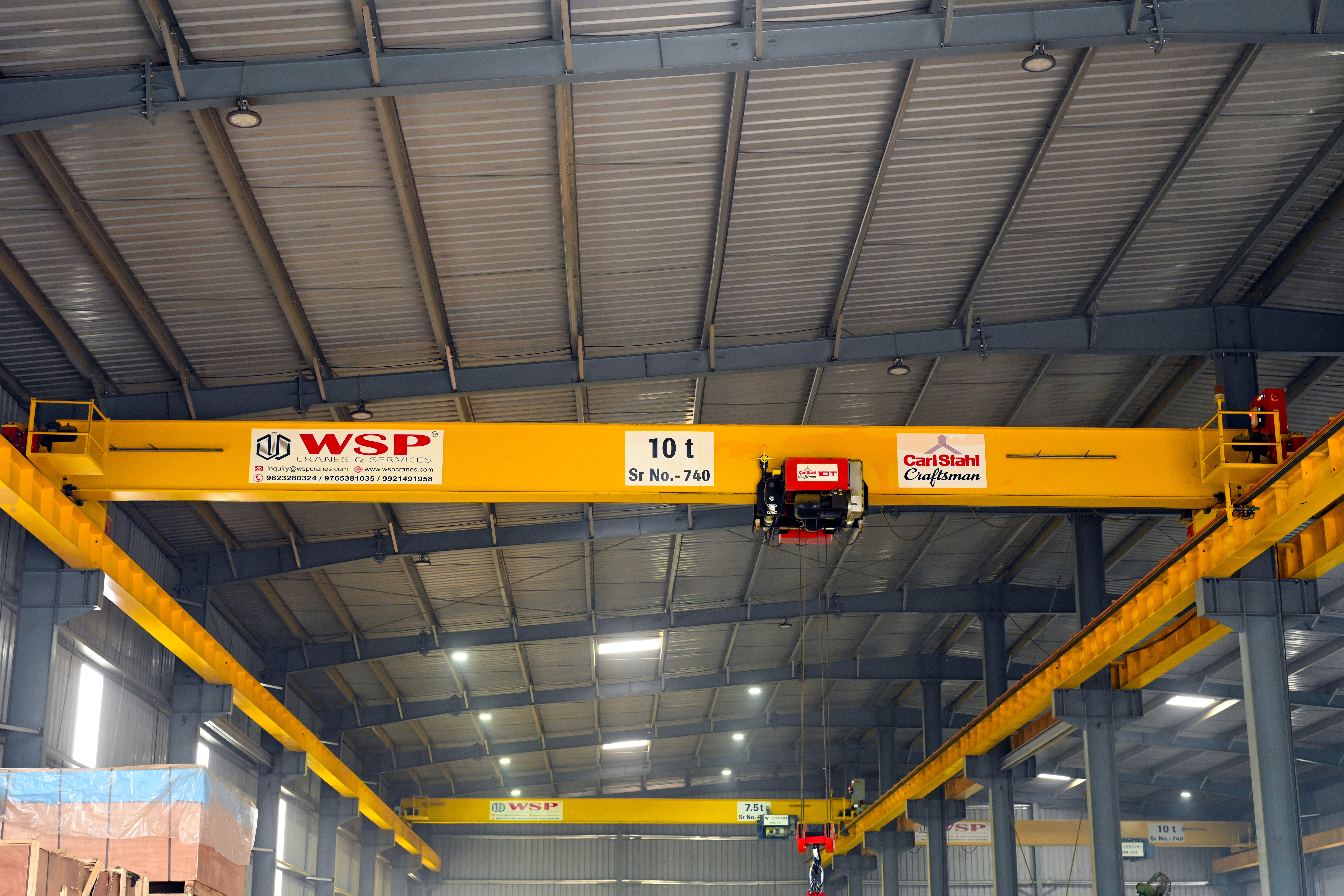
WSP Crane & Services is an EOT crane manufacturer and supplier providing industrial Electric Overhead Travelling Crane solutions for manufacturing plants, engineering facilities, automotive industries, fabrication units, warehouses, steel and metal industries, power projects, and other material-handling applications across India.
Our EOT crane solutions are developed according to the actual requirements of each application, including lifting capacity, crane span, lifting height, duty cycle, operating environment, available headroom, runway arrangement, and building structure.
From crane selection and engineering to manufacturing, erection, installation, commissioning, and after-sales service, WSP Crane & Services supports industrial customers throughout the crane project lifecycle.
Why Choose WSP Crane & Services for EOT Cranes?
Choosing an EOT crane manufacturer involves more than comparing equipment prices. The crane must be appropriately designed for the load, building, production process, operating frequency, lifting height, and working environment.
WSP Crane & Services follows an application-focused approach to industrial crane requirements, providing support for EOT crane manufacturing, erection, installation, commissioning, maintenance, and technical assistance.
- EOT crane manufacturing and supply
- Application-specific crane configurations
- Single and double girder EOT crane solutions
- Site assessment and technical consultation
- Crane erection and installation support
- Commissioning assistance
- Preventive and corrective maintenance
- Technical and after-sales support
- Industrial material-handling solutions
- Application-focused crane recommendations
EOT Crane Manufacturing Capability
An EOT crane is an engineered lifting system in which the bridge structure, hoisting mechanism, travelling system, electrical equipment, controls, and safety components must work together as a complete system.
WSP Crane & Services develops EOT crane solutions according to the customer's lifting requirements and site conditions. The crane configuration can be evaluated based on safe working load, span, lifting height, operating frequency, duty classification, operating environment, and available building clearances.
Depending on the application, EOT crane solutions can be configured with appropriate bridge girders, end carriages, hoisting equipment, travelling mechanisms, electrical systems, controls, and safety devices.
EOT Crane Components
- Bridge or girder structure
- End carriages
- Electric hoist and trolley
- Wire rope and hook assembly
- Long-travel mechanism
- Cross-travel mechanism
- Electrical control system
- Pendant or remote-control system
- Crane runway and rails
- Limit switches and safety devices
The final configuration should always be determined according to the application, technical requirements, site conditions, applicable standards, and safety requirements.
Types of EOT Cranes for Industrial Applications
Different industrial applications require different crane configurations. EOT cranes can therefore be selected according to lifting capacity, span, lifting height, duty classification, operating conditions, and application.
Single Girder EOT Crane
A Single Girder EOT Crane uses one main bridge girder and is commonly considered for light- to medium-duty industrial material-handling applications.
Single girder cranes can be suitable for engineering workshops, manufacturing units, warehouses, fabrication facilities, automobile component industries, maintenance departments, and general material-handling operations.
- Engineering workshops
- Manufacturing units
- Warehouses
- Fabrication shops
- Automobile component industries
- Maintenance departments
- General material-handling applications
The appropriate capacity, span, lifting height, hoist arrangement, and duty classification should be selected according to the actual application and building requirements.
Double Girder EOT Crane
A Double Girder EOT Crane uses two main bridge girders and is generally considered for heavier-duty lifting applications, larger spans, and higher lifting capacities.
Double girder EOT cranes can be used in demanding industrial environments for handling heavy machinery, steel products, fabricated components, and other substantial loads.
- Heavy engineering industries
- Steel and metal industries
- Fabrication plants
- Manufacturing facilities
- Power and industrial projects
- Heavy machinery handling
- Large industrial workshops
The final crane design should be determined according to safe working load, span, lifting height, duty cycle, operating speed, building structure, operating environment, and other application requirements.
EOT Crane Specifications and Customization
Every industrial facility has different lifting and material-handling requirements. An EOT crane should therefore be selected according to the actual operating conditions rather than a standard specification alone.
| Requirement | Why It Matters |
|---|---|
| Lifting Capacity | Determines the required safe working load of the crane. |
| Crane Span | Determines the horizontal operating coverage of the crane. |
| Lifting Height | Determines the required vertical lifting range and hook travel. |
| Duty Cycle | Helps determine the appropriate crane and component configuration. |
| Operating Speed | Can influence production requirements and material movement. |
| Headroom | Important where building clearance is limited. |
| Operating Environment | Temperature, dust, humidity and other conditions can influence component selection. |
| Building Structure | Columns, runway beams, clearances and supporting structures must be evaluated. |
Lifting Capacity
The required safe working load should be determined according to the maximum load that needs to be lifted during normal industrial operations.
Crane Span
Crane span determines the horizontal distance across which the crane needs to operate. Building width, runway arrangement, supporting structures, and required clearances should be considered.
Lifting Height
Lifting height is important in facilities with limited headroom, high production areas, storage requirements, and specialized lifting operations.
Duty Cycle
The frequency and intensity of crane operation can influence the appropriate crane configuration and component selection. A crane used occasionally for maintenance can have different requirements from a crane operating regularly in a production environment.
Operating Environment
Temperature, dust, humidity, corrosive conditions, outdoor exposure, and other environmental factors can influence the selection of mechanical and electrical components.
Building and Runway Requirements
Existing columns, runway beams, headroom, building dimensions, available clearances, and supporting structures should be assessed before installation.
EOT Crane Manufacturing Process
A structured manufacturing and engineering process helps ensure that the crane configuration corresponds with the customer's application and technical requirements.
1. Requirement Assessment
The project requirements are evaluated based on lifting capacity, span, lifting height, application, operating frequency, building dimensions, operating environment, and other site conditions.
2. Engineering and Crane Design
The crane configuration is developed according to the required application, operating conditions, and project requirements.
3. Structural Fabrication
Crane structural components are fabricated according to the approved engineering requirements and project configuration.
4. Mechanical Assembly
Major mechanical components such as bridge girders, end carriages, hoisting equipment, and travelling mechanisms are assembled according to the crane design.
5. Electrical and Control Integration
Electrical and control systems are integrated according to the required operating configuration, control method, and project requirements.
6. Inspection and Testing
Components and assembled systems are inspected and tested according to the applicable project requirements and relevant safety procedures.
7. Installation and Commissioning
The completed crane can then be installed at the customer's facility, aligned, tested, and commissioned before regular operation.
Applications of EOT Cranes in India
EOT cranes are widely used in industrial facilities because they allow materials and equipment to be transported through an overhead operating area without occupying the same floor space required for many ground-level material-handling methods.
Common applications include:
- Manufacturing industries
- Engineering industries
- Automotive industries
- Fabrication units
- Steel and metal industries
- Warehouses
- Foundries
- Power plants
- Machine manufacturing facilities
- Infrastructure projects
- Industrial maintenance facilities
- General material-handling operations
Depending on the application, EOT cranes can be used to move raw materials, machinery, fabricated components, production assemblies, finished products, and maintenance equipment.
Industries We Serve
EOT crane requirements vary from one industrial sector to another. The crane configuration should therefore be selected according to the load characteristics, production process, operating frequency, building arrangement, and working environment.
- Automobile and automobile component manufacturing
- Engineering and heavy engineering
- Steel and metal industries
- Fabrication industries
- Machine manufacturing
- Industrial manufacturing plants
- Warehousing and material handling
- Power and infrastructure projects
- Maintenance and service facilities
EOT Crane Installation and Erection Services
Purchasing an EOT crane is only one part of an industrial lifting project. Correct erection, installation, alignment, electrical connection, testing, and commissioning are also important for reliable operation.
WSP Crane & Services provides crane erection and commissioning support for overhead, gantry, and jib crane systems. Depending on the project scope, installation activities can include site assessment, mechanical assembly, electrical connections, alignment checks, testing, commissioning, and documentation.
A typical installation project may involve:
- Site inspection
- Installation planning
- Assessment of crane and runway requirements
- Component positioning
- Mechanical assembly
- Electrical connections
- Alignment and clearance checks
- Functional testing
- Safety and control-system checks
- Commissioning
- Documentation and customer handover
EOT Crane Commissioning Services
Commissioning is an important stage before a newly installed crane enters regular industrial operation.
During commissioning, the mechanical, electrical, lifting, travelling, control, and safety functions of the crane can be checked according to the applicable project requirements.
WSP Crane & Services provides crane commissioning support as part of its crane service offering.
A structured commissioning process helps confirm that the crane has been installed correctly and that its operating systems are functioning as intended before regular use.
EOT Crane Maintenance and After-Sales Service
Regular maintenance is important for industrial lifting equipment. Continuous lifting, travelling, environmental exposure, and frequent operation can contribute to wear of mechanical and electrical components over time.
Preventive EOT crane maintenance can help identify potential problems before they develop into major failures and can support reliable operation, reduced downtime, and longer equipment service life.
Maintenance may include inspection of:
- Hoist components
- Wire ropes
- Hooks
- Brakes
- Motors
- Gearboxes
- Crane wheels
- Electrical panels
- Limit switches
- Control systems
- Festoon systems
- End carriages
- Structural components
Maintenance frequency should be determined according to the crane design, operating environment, usage, duty cycle, manufacturer's recommendations, and applicable safety requirements.
How Much Does an EOT Crane Cost in India?
EOT crane price in India varies according to the crane's technical specifications, configuration, application, and installation requirements. There is no single standard price that applies to every EOT crane project.
Important factors affecting EOT crane cost include:
- Crane type
- Single or double girder configuration
- Lifting capacity
- Crane span
- Lifting height
- Duty classification
- Hoist specifications
- Lifting and travelling speeds
- Control system
- Electrical components
- Safety features
- Building and runway requirements
- Installation and erection requirements
- Transportation
- Commissioning
- Customization
For an accurate quotation, customers should provide technical and site information such as required lifting capacity, span, lifting height, application, operating frequency, and installation conditions.
A project-specific quotation can then be prepared according to the required crane configuration and application.
EOT Crane Manufacturer vs. Supplier: What Should You Consider?
When comparing EOT crane manufacturers and suppliers in India, purchase price should not be the only deciding factor. The complete project capability and long-term service support should also be considered.
- Engineering expertise: Can the company understand and evaluate your lifting application?
- Manufacturing capability: Does the company have the required production and technical capabilities?
- Installation support: Is professional erection and commissioning available?
- Maintenance services: Does the company provide preventive and corrective maintenance?
- Customization: Can the crane configuration be adapted to site requirements?
- Technical support: Is technical assistance available after installation?
- Documentation: Are relevant project, installation, and commissioning records available?
- Spare parts and service: Can required replacement components and service support be arranged?
A dependable crane partner should provide more than equipment. It should support the customer throughout the working life of the crane.
EOT Cranes for Industrial Material Handling
Efficient material handling can have a direct impact on productivity in many industrial facilities. An overhead EOT crane provides a dedicated lifting and travelling system for transporting materials within its designated operating area.
Depending on the application, an EOT crane can help industries:
- Move heavy components
- Load and unload materials
- Transfer components between workstations
- Support fabrication operations
- Handle machinery
- Assist maintenance activities
- Improve material flow
- Reduce dependence on manual material handling
The crane should always be selected according to the specific operational requirements, load characteristics, building conditions, and applicable safety considerations.
EOT Crane Manufacturer and Service Support Across India
Industrial customers may require support not only during crane procurement but also during installation, commissioning, maintenance, inspection, and future service requirements.
WSP Crane & Services is based in Pune, Maharashtra, and supports industrial customers with crane-related requirements. Depending on project requirements and service scope, support can include EOT crane installation, commissioning, maintenance, technical assistance, and material-handling solutions.
Customers should discuss their specific site location and project requirements with the WSP team to determine the available service scope.
What Makes a Good EOT Crane Manufacturer in India?
A suitable EOT crane manufacturer should understand the complete relationship between the load, crane configuration, building, application, operating cycle, and maintenance requirements.
A practical approach can be summarized as:
Your Load → Your Building → Your Application → Your Operating Cycle → Your Safety Requirements → Your Maintenance Requirements
This application-focused approach helps ensure that the selected crane configuration is aligned with the actual industrial operation rather than being selected only on the basis of price or a standard specification.
About WSP Crane & Services
WSP Crane & Services provides industrial crane and material-handling solutions for customers requiring EOT cranes, gantry cranes, jib cranes, hoists, installation, commissioning, and maintenance support.
The company is based in Dehu, Pune, Maharashtra, and supports industrial customers with crane-related requirements.
To learn more about WSP Crane & Services, its facilities, capabilities, products, and services, customers can explore the company's About Us page.
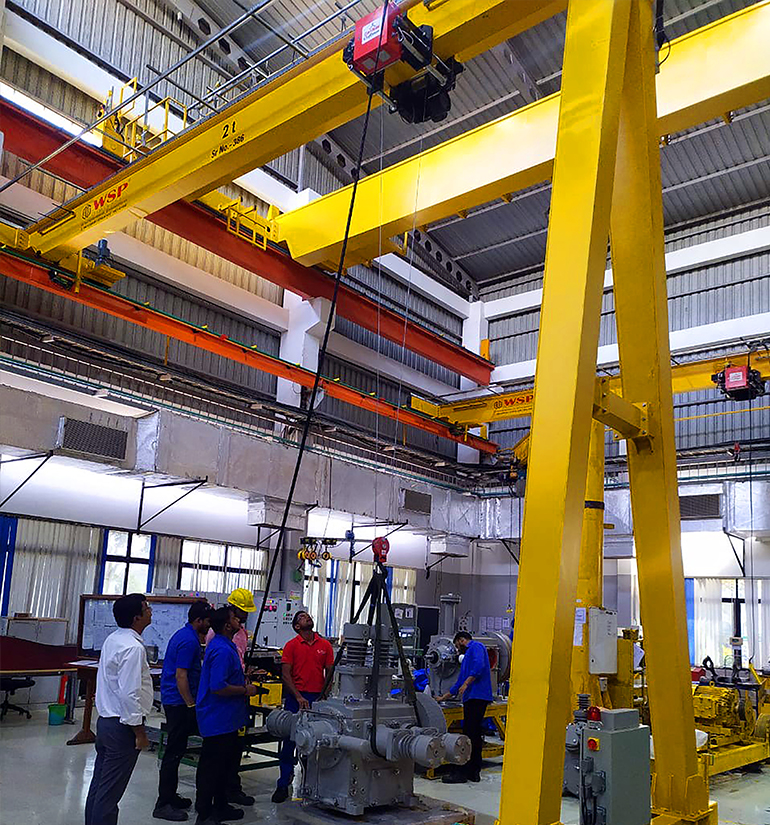
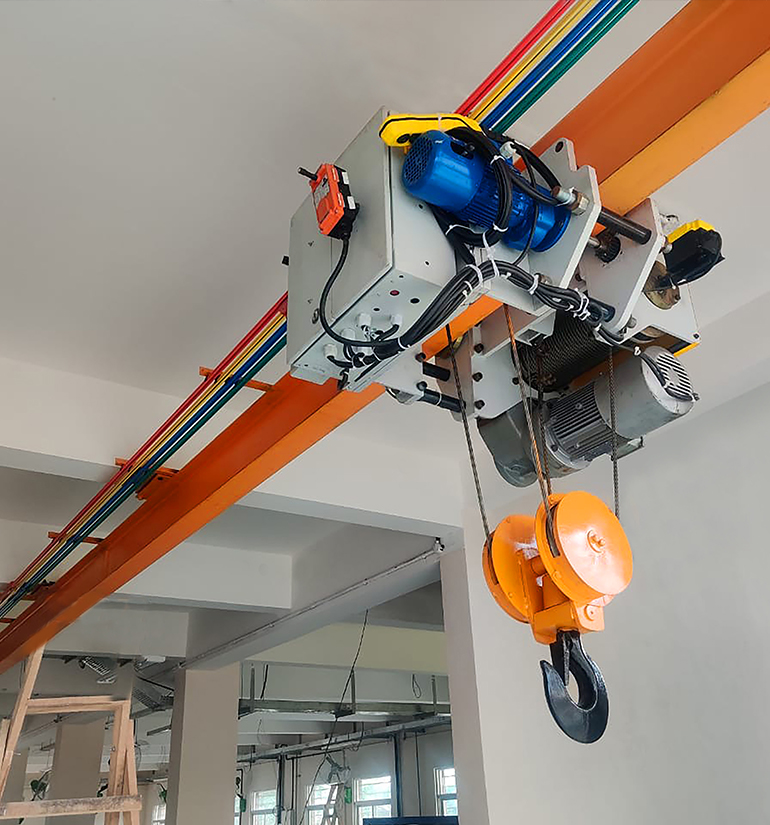
EOT Crane Manufacturing and Installation Gallery
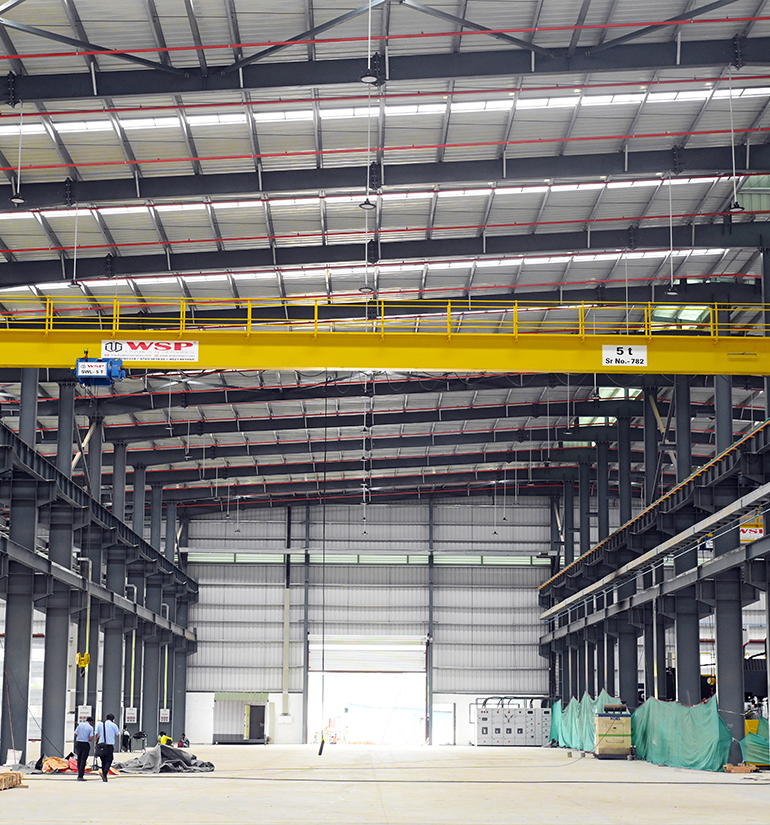
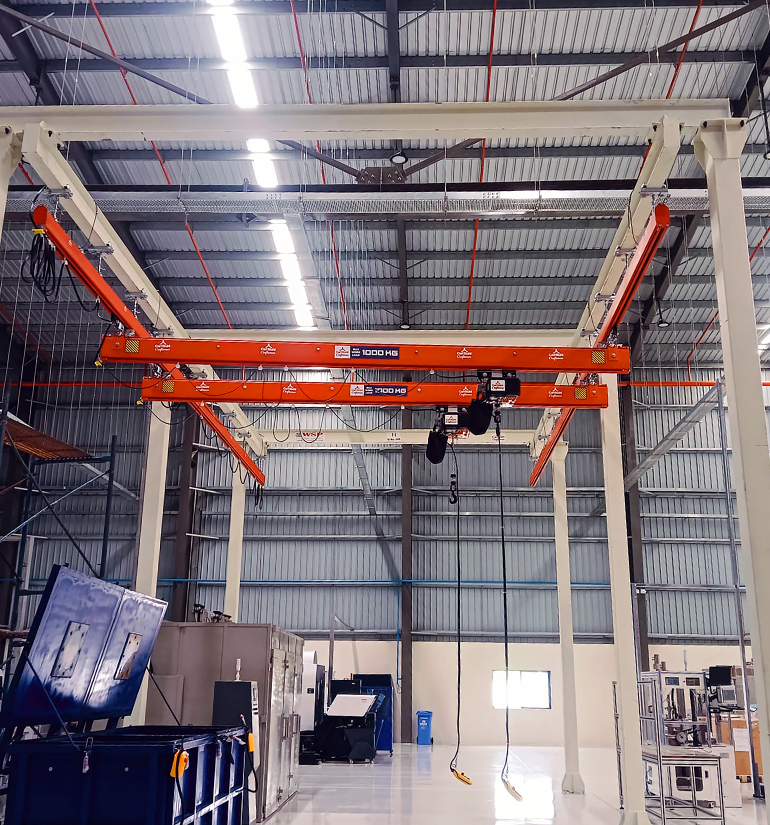
View examples of EOT crane manufacturing, fabrication, installation, and industrial material-handling projects. Use genuine WSP photographs wherever possible to demonstrate manufacturing and project capabilities.
Frequently Asked Questions About EOT Cranes
What is an EOT crane?
An EOT crane, or Electric Overhead Travelling Crane, is an electrically operated overhead lifting system used to lift, lower, and move materials within a defined industrial working area.
What is the difference between a single girder and double girder EOT crane?
A single girder EOT crane uses one main bridge girder and is generally considered for light- to medium-duty applications. A double girder EOT crane uses two main girders and is generally selected for heavier-duty applications, larger spans, and higher lifting requirements.
How much does an EOT crane cost in India?
EOT crane cost depends on factors including capacity, span, lifting height, crane configuration, duty classification, hoist, controls, electrical equipment, installation, and site requirements. A project-specific quotation is required for accurate pricing.
Can EOT cranes be customized?
Yes. EOT crane configurations can be developed according to application requirements such as lifting capacity, span, lifting height, operating frequency, available headroom, building structure, and operating environment.
Does WSP provide EOT crane installation?
WSP Crane & Services provides EOT crane erection, installation, and commissioning support according to project requirements.
Does WSP provide EOT crane maintenance?
WSP Crane & Services provides crane maintenance and technical support for industrial crane systems according to the required service scope.
What information is required for an EOT crane quotation?
Useful information includes lifting capacity, crane span, lifting height, application, operating frequency, indoor or outdoor installation, building dimensions, available headroom, existing runway details, and required control system.
Which industries use EOT cranes?
EOT cranes are commonly used in manufacturing, engineering, automotive, fabrication, steel and metal, machine manufacturing, warehousing, power, infrastructure, and industrial maintenance applications.
Get an EOT Crane Quote in India
Planning a new EOT crane installation, replacing an existing crane, expanding your material-handling capacity, or requiring crane service support? Share your technical and site requirements with WSP Crane & Services.
Providing complete project information helps the crane engineering team understand the application and recommend an appropriate crane configuration.
Information to Provide for an EOT Crane Quotation
- Required lifting capacity
- Crane span
- Lifting height
- Factory or building dimensions
- Application
- Operating frequency
- Indoor or outdoor installation
- Existing runway details, if applicable
- Available headroom
- Required control system
- Expected installation timeline
Looking for EOT Crane Manufacturers in India?
WSP Crane & Services supports industrial customers with EOT crane manufacturing and crane-related services including erection, installation, commissioning, maintenance, and technical assistance.
Whether you are planning a new manufacturing facility, expanding an existing plant, replacing an existing crane, or evaluating a new material-handling system, contact WSP Crane & Services to discuss your requirements.

