Single Girder EOT Crane: The Short Answer
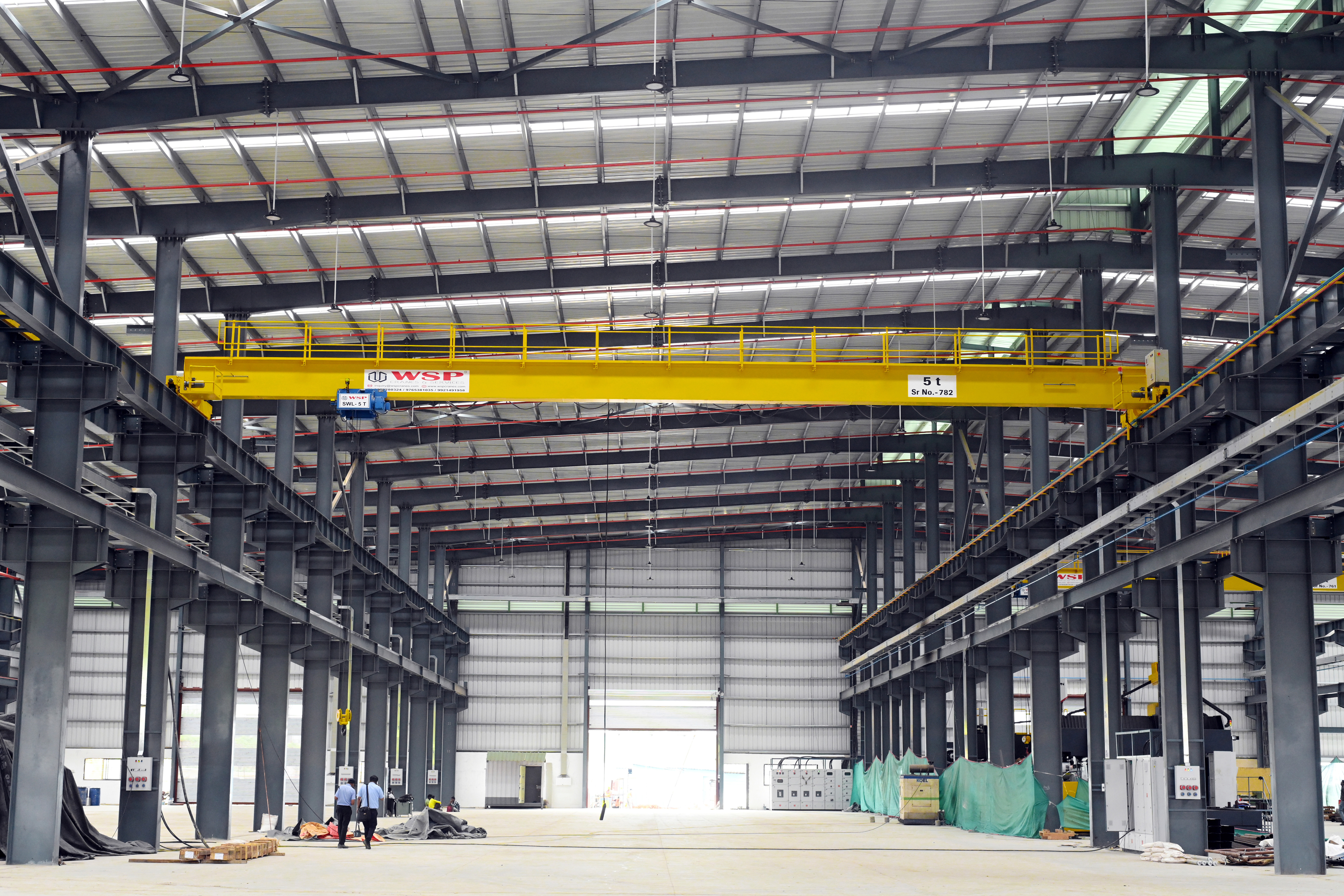
A single girder EOT (Electric Overhead Travelling) crane has one bridge girder that runs on rails along your shop walls, with a hoist that travels along the girder. It lifts, carries and places loads anywhere over the floor while keeping the floor free for work. For most workshops, warehouses and maintenance bays, it is the most economical overhead crane for light to medium duty.
WSP Cranes & Services builds single girder EOT cranes at our Pune works and supplies them across India for manufacturing plants, engineering workshops, fabrication units, warehouses and other industrial sites. Every crane is sized for your building, load, span, lifting height and working hours.
What Is a Single Girder EOT Crane and How Does It Work?
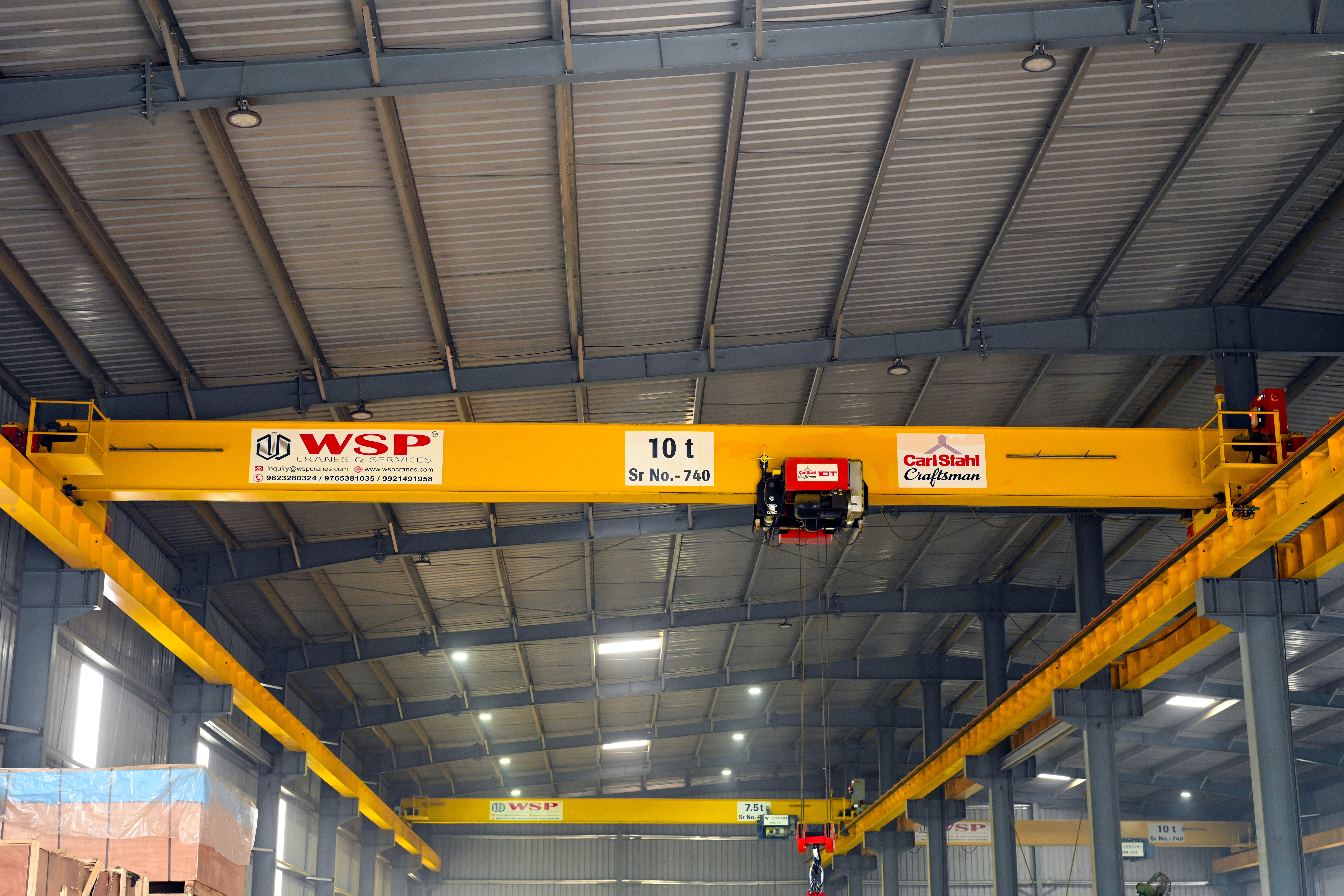
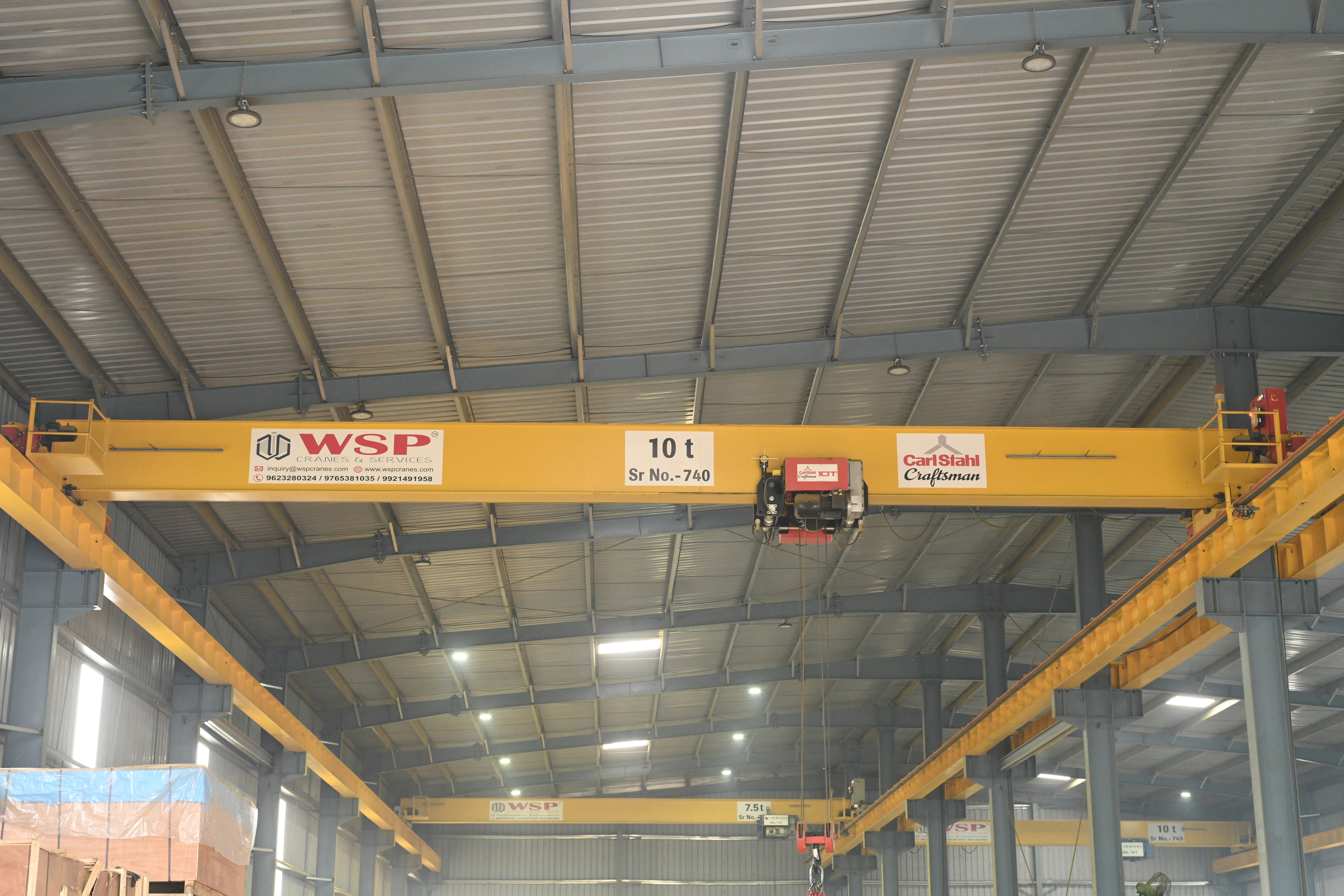
The bridge is one main girder supported by two end carriages that travel on runway rails. The hoist and trolley move along the girder. Three movements work together to place a load exactly where you need it:
- Hoisting: raises and lowers the load.
- Cross Travel (CT): moves the hoist along the girder.
- Long Travel (LT): moves the whole crane along the runway.
Because the bridge is lighter than a double girder crane, it puts less load on your building columns and runway. That often makes it easier and cheaper to install, provided the load, span and duty suit a single girder design.
Single Girder EOT Crane Technical Specifications
| Parameter | Technical Specification |
|---|---|
| Capacity | 250 kg – 20 Ton |
| Span | Up to 50 m |
| Height of Lift (HOL) | Up to 30 m |
| Design Standards | IS 3177 / IS 807 |
| Crane Type | Single Girder EOT |
| Operation | Pendant / Radio Remote / Combined Mode |
| Drive Control | VFD-controlled Hoist / CT / LT |
| Power Feeding | Shrouded DSL / Festoon System |
The final configuration depends on your load, duty, building, runway and site conditions.
Which Capacity Do You Need? 1, 2, 5, 10 or 20 Ton
Most buyers start with tonnage, so here is a practical guide. These are typical uses, not fixed rules. Span and duty also matter.
| Capacity | Typically Used For |
|---|---|
| Up to 3 Ton | Assembly lines, tool rooms, maintenance bays, light machining, packing and dispatch |
| 5 Ton | Machine shops, fabrication units, motor and pump handling, general warehouses |
| 10 Ton | Heavier fabrication, die and mould handling, workshops moving large assemblies |
| 15 – 20 Ton | Heavy components. Check span and duty carefully, as a double girder EOT crane may suit better |
Always size the crane for the heaviest load plus the lifting beam or attachment, not the material weight alone.
Single Girder EOT Crane Price: What Decides the Cost
Buyers often ask for a price per ton, but two 5 ton cranes can cost very differently. The price mainly depends on:
- Capacity and span: a longer span needs a stronger, heavier girder.
- Height of lift: more lift means more wire rope and a larger drum.
- Duty class: a crane used all day needs a heavier-duty hoist, motors and brakes than one used a few times a day.
- Hoist type: standard or premium branded wire rope hoist.
- Drives and controls: VFD and radio remote add cost but improve control and safety.
- Power feeding and site conditions: DSL or festoon, indoor or outdoor use, and whether runway beams already exist.
For an accurate quote, send us your capacity, span, height of lift and working hours through our contact page.
Key Features of WSP Single Girder EOT Cranes
1. Optimized Girder Design
The girder is designed for the required strength with controlled deflection, using rolled or fabricated sections depending on your span and load. A well-designed girder keeps the trolley moving smoothly and gives the crane a long working life.
2. High-Duty Hoisting System
The hoist is selected for your lifting capacity, lifting height and duty cycle. WSP uses Carl Stahl Craftsman wire rope hoists in high-duty configurations aligned with applicable FEM/ISO classifications. See our electric wire rope hoists and trolleys and crabs.
3. VFD-Controlled Drive System
Variable Frequency Drives control hoisting, cross travel and long travel. This gives gentle starts and stops, less load swing and more precise positioning, and it reduces mechanical shock on the crane.
4. Precision-Machined End Carriages
Machined end carriages and hardened travel wheels support smooth long-travel movement and reduce wear on wheels and rails.
5. Helical/Hardened Gearbox
Helical or hardened gearboxes deliver reliable torque for starting and moving the crane while keeping operating noise low.
6. Fail-Safe Braking System
Fail-safe electromagnetic or electro-hydraulic brakes stop each movement when needed. Brakes are selected for the mechanism, load, speed and duty.
7. Flexible Control Options
You can operate the crane with:
- Pendant control
- Radio remote control
- Combined pendant and radio remote operation
Radio remote keeps the operator at a safe distance with a clear view of the load. A pendant is simple and economical for smaller bays.
8. Reliable Power Feeding
Power reaches the moving crane through a shrouded DSL system or a festoon system, chosen to suit your runway and site.
Major Components of a Single Girder EOT Crane
- Main Girder
- The main bridge structure. It carries the hoist trolley and passes the load to the end carriages.
- End Carriages
- Fitted at both ends of the girder. They hold the travel wheels and long-travel drive.
- Hoist and Trolley
- The hoist lifts and lowers. The trolley carries it along the girder.
- Wire Rope and Hook Assembly
- Connects the hoist to the load through the hook block.
- Long-Travel and Cross-Travel Mechanisms
- Motors, gearboxes and wheels that move the whole crane along the runway (LT) and the hoist along the girder (CT).
- Brakes
- Control and stop each crane movement.
- Control Panel and Power Feeding
- The panel holds the control and protection gear. Shrouded DSL or festoon supplies power to the moving crane.
- Operator Controls
- Pendant station, radio remote, or a combined system.
Applications of Single Girder EOT Cranes
- Manufacturing Plants and Assembly Lines
- Moving raw materials, components, machinery parts and finished products.
- Engineering Workshops and Machining Shops
- Loading heavy jobs onto machines and moving assemblies between stations.
- Fabrication Units
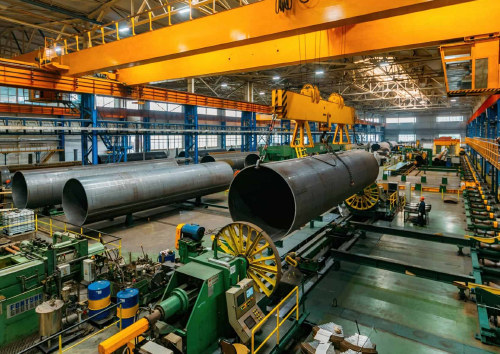
- Handling plates, sections, structures and fabricated assemblies.
- Warehouses
- Loading, unloading and stacking heavy items where suitable overhead structure exists.
- Foundries and Metal Industries
- Handling moulds, castings and tools, subject to duty class and environmental conditions.
- Maintenance Facilities
- Lifting motors, pumps, gearboxes and machinery parts during installation and repair.
Advantages of Single Girder EOT Cranes
- Frees Up Floor Space
- Loads move overhead, so floor areas stay available for production and storage.
- Lower Cost and Lighter Structure
- Where the load and duty suit it, a single girder crane costs less and puts less weight on your building than a heavier crane.
- Made to Your Requirements
- Capacity, span, lifting height, speeds, controls and power feeding are all selected for your application.
- Smooth, Controlled Handling
- VFD drives give gentle acceleration and deceleration for safer load positioning.
- Easy Maintenance
- Accessible components make routine inspection and servicing simpler.
Single Girder vs Double Girder EOT Crane
Choose by capacity, span, lifting height, duty, headroom and site conditions. Not by capacity alone.
| Factor | Single Girder EOT Crane | Double Girder EOT Crane |
|---|---|---|
| Main Bridge | One main girder | Two main girders |
| Best For | Light to medium duty | Heavy loads and continuous duty |
| Weight on Building | Generally lower | Generally higher |
| Hook Height | Good with a low-headroom hoist | Higher, as the hook lifts between the girders |
| Extras (Cabin, Walkway, Second Hoist) | Limited | Easy to add |
| Cost | Lower upfront | Higher |
Need more capacity or a longer span? See our double girder EOT cranes. Working in an open yard? See our goliath cranes.
How to Choose the Right Single Girder EOT Crane
Choosing the correct EOT crane comes down to these points:
- Load Capacity
The heaviest load including any lifting beam or attachment, with some room for future growth. - Crane Span
The distance between runway rail centres. - Height of Lift
Measured from the floor to the highest hook position, checked against your roof and truss clearance. - Duty
How many lifts per hour, hours per day, and how close to full load you lift. - Operating Environment
Indoor or outdoor use, heat, dust, moisture or corrosive air. - Available Headroom
The distance between the runway level and the roof structure. - Control Method
Pendant, radio remote or combined, based on visibility and working conditions. - Speeds
Lifting, cross-travel and long-travel speeds to match your productivity needs. - Power Supply
Available supply and runway layout, which decide DSL or festoon. - Building and Runway
Whether runway beams and columns already exist and can carry the crane load.
Design Standards: IS 3177 and IS 807
WSP designs single girder EOT cranes with reference to IS 3177 and IS 807, as specified for the application.
IS 3177 is the code of practice for electric overhead travelling cranes, while IS 807 covers the structural design of cranes and hoists. Confirm the standards, design calculations, safety provisions and inspection requirements for your specific project and site.
Safety Tips for Single Girder EOT Cranes
- Never exceed the rated capacity.
- Check the hook, wire rope, brakes and limit switches before each shift.
- Make sure the runway and supporting structure suit the crane load.
- Keep people clear of the load and the working area.
- Use suitable slings and lifting beams.
- Do not side-pull or drag loads.
- Allow only trained and authorized operators.
- Investigate unusual noise, vibration or brake behaviour immediately.
Follow the manufacturer's instructions and all applicable statutory requirements.
Maintenance of Single Girder EOT Cranes
- Mechanical:
- Check wheels, gearboxes, couplings, bearings, wire rope, hooks and structural connections.
- Electrical:
- Check motors, control panel, cables, limit switches, VFDs and protection devices.
- Brakes:
- Verify condition, adjustment and wear as the manufacturer requires.
- Lubrication:
- Lubricate at the recommended intervals with the recommended lubricants.
Set inspection frequency by duty, operating hours and environment, following the manufacturer's recommendations and applicable regulations.
Why Choose WSP Cranes & Services?
WSP designs each crane around your application instead of offering a one-size-fits-all model. We size the configuration using:
- Capacity, span and height of lift
- Duty class and operating frequency
- Lifting and travelling speeds
- Headroom and building structure
- Environmental conditions
- Control and power-feeding needs
Learn more about WSP Cranes or browse our full range of EOT cranes, jib cranes, monorail cranes, underslung cranes and crane kits.
Frequently Asked Questions About Single Girder EOT Cranes
What is the price of a single girder EOT crane in India?
There is no fixed price. It depends mainly on capacity, span, height of lift, duty class, hoist type, controls and power feeding. Share these details with WSP Cranes and we will send a written quotation.
Up to what capacity can a single girder EOT crane be used?
WSP builds single girder EOT cranes from 250 kg to 20 ton. For heavier loads, very long spans or continuous heavy duty, a double girder crane is usually the better choice.
What is the difference between single girder and double girder EOT cranes?
A single girder crane has one bridge girder and suits light to medium duty. A double girder crane has two girders and suits heavier loads, longer spans, higher hook height and continuous duty.
What is the maximum span and height of lift?
WSP single girder EOT cranes are available with spans up to 50 m and height of lift up to 30 m, subject to capacity, building structure and design.
Which standards are used for EOT cranes?
WSP designs with reference to IS 3177 for EOT cranes and IS 807 for crane structural design. Applicable requirements should be confirmed for each project.
Can the crane use radio remote control and VFD?
Yes. Controls can be pendant, radio remote or combined, and hoist, cross travel and long travel can be VFD-controlled for smoother starts and stops.
Where are single girder EOT cranes used?
They are used in manufacturing plants, engineering workshops, fabrication units, warehouses, foundries, assembly lines and maintenance facilities.
What details do I need to give for a quotation?
Capacity, span between rail centres, height of lift, working hours per day, indoor or outdoor use, control type, power supply, and whether runway beams and columns already exist.
Get a Quote for Your Single Girder EOT Crane
Tell WSP Cranes & Services your capacity, span, height of lift and working hours. We will suggest the right configuration and send you a quotation. Our works are at Dehugaon, Pune, and we supply across India.
Call +91 96232 80324 or send an enquiry.
Applications

Fabrication Units
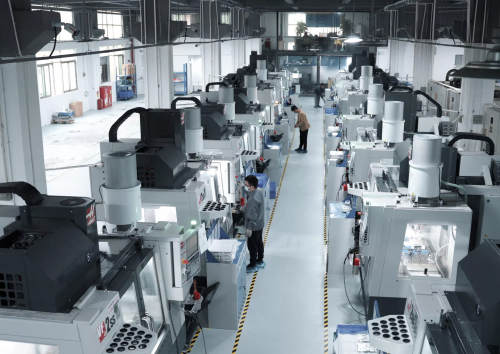
Machining Shops

Assembly Lines

Warehouses

Foundries